The History of National Coinage Design in the Eurozone
When you look at a euro coin, you are holding a story of both unity and identity in your hand. One side is the same across an entire continent, a symbol of a shared economic future, while the other is a unique canvas reflecting centuries of national culture. The eurozone national coin design history is a fascinating narrative of how diverse nations came together to create a single currency while fiercely preserving their individual heritage.
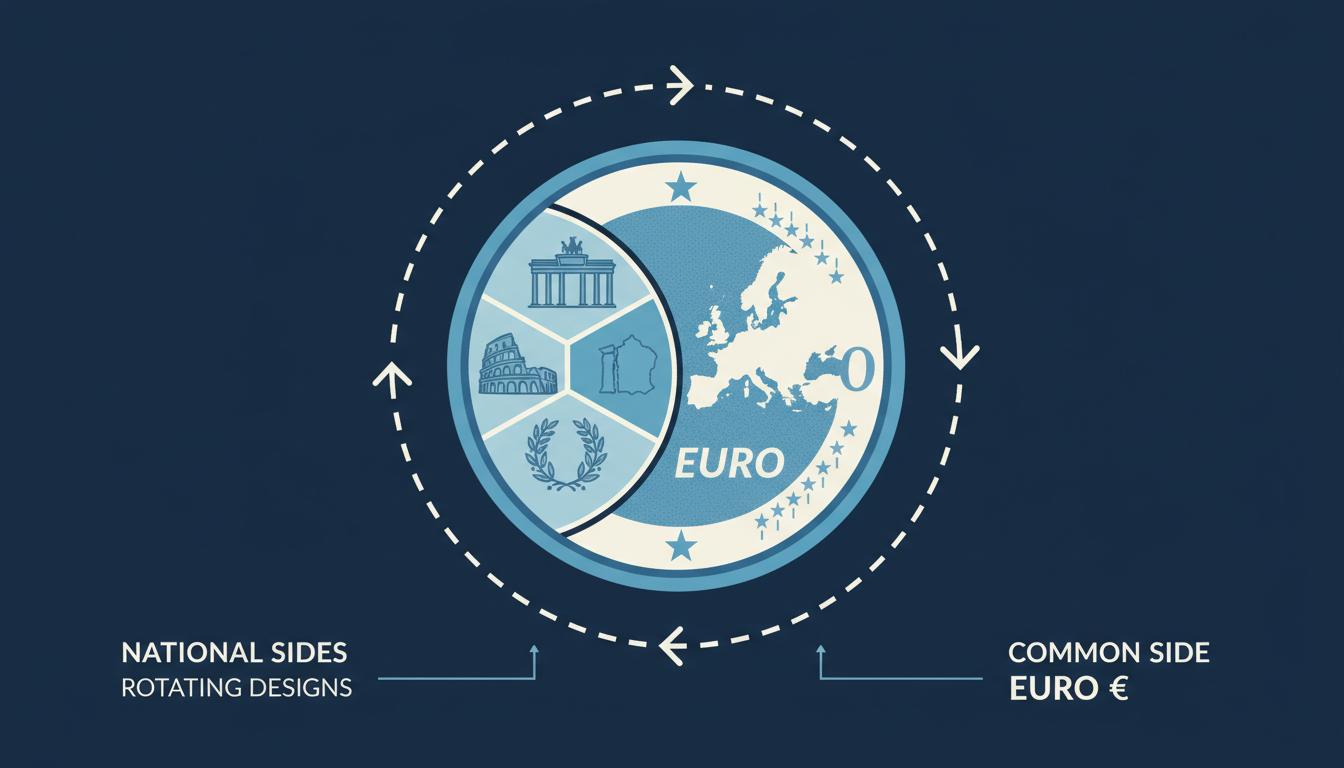
The core concept is simple yet profound: every euro coin has a common face symbolizing European unity and a national face displaying distinct local motifs. This dual-sided approach was a deliberate choice, designed to ease trade and travel across borders without erasing the rich cultural tapestry that defines Europe. This article explores how these national designs were chosen, the historical symbols they inherited, and how they continue to evolve today.
The Blueprint for a Unified Currency with National Identity
The journey toward the euro as a physical currency began in earnest after its official adoption date was set in 1999. A pivotal decision was made at a 1997 European Council meeting in Amsterdam: all euro coins would feature a shared common side, but each member state would be free to design its own “national side.” This decision was fundamental to the entire project, creating a balance between a unified monetary system and the preservation of national sovereignty.
This framework was part of the broader creation of the euro, a process that required careful planning and compromise. The common side would represent the collective, while the euro coin national sides would serve as a constant reminder of each country’s unique history and culture. This structure ensures that a coin from Finland is as easily spent in Spain as a coin from Germany, yet each one carries a distinct piece of its origin.
Designing for Unity and Compatibility
To ensure seamless circulation, all national designs had to adhere to strict technical specifications. The European Central Bank oversees these standards, which dictate the size, weight, and metallic composition of each coin denomination. Beyond the technical aspects, a few key design rules were established:
- The Twelve Stars: Every national side must feature the twelve stars of the European Union, typically arranged in a circle along the coin’s outer edge.
- No Repetition: The coin’s denomination and currency name are displayed on the common side, so they should not be repeated on the national side.
- Interoperability: The coins must be easily recognizable by vending machines and other automated systems across the entire eurozone.
The common sides themselves were the result of a pan-European design competition. The winning proposal came from Luc Luycx of the Royal Belgian Mint. His designs, featuring stylized maps of Europe, perfectly captured the themes of unity and diversity that the currency aimed to represent. You can find more information about the common designs on the official European Central Bank website.
A Canvas for Culture: The Eurozone National Coin Design History
With the common framework established, each member state embarked on its own journey to select its national symbols. This process often involved national design competitions, input from art experts and historians, and sometimes even public consultations. The result is a stunning collection of miniature artworks that reflect the soul of each nation.
These national symbols on euro coins fall into several broad categories:
- Historic Rulers and Royalty: Monarchies like Spain, the Netherlands, and Belgium chose to feature their reigning heads of state.
- Artistic and Literary Giants: Italy celebrated its artistic legacy with portraits of figures like Leonardo da Vinci and Dante Alighieri. Spain also honored its literary heritage with an image of Miguel de Cervantes.
- National Landmarks: Germany’s Brandenburg Gate and Austria’s Belvedere Palace are prominent examples of architectural symbols.
- Heraldic and Mythological Symbols: Finland features its heraldic lion, while Greece draws from its rich ancient history.
Echoes of the Past: Pre-Euro Coinage Influence
Many of the chosen designs were not new creations but rather continuations of long-standing numismatic traditions. The transition to the euro provided an opportunity to honor the currencies being replaced, connecting the past with the future. This is particularly evident in the designs of France and Germany.
The Legacy of the History of French Franc Coin Design
Before the euro, French franc coins frequently featured two powerful symbols of the Republic: Marianne and “La Semeuse” (the sower). Marianne is a national personification of the republic, representing liberty and reason. The sower, a graceful figure striding forward while scattering seeds, was introduced by Oscar Roty in 1897 and symbolizes hope and the nation’s future.
France chose to carry these iconic figures into the euro era. The 1, 2, and 5-cent coins depict a modern portrait of Marianne, while the 10, 20, and 50-cent coins feature the classic image of the sower. This decision ensured a sense of continuity for French citizens, linking the new currency directly to the values of the French Republic.
German Mark Coin Design Pre-Euro and Its Continuity
Similarly, the German mark coins after World War II consistently used two key motifs: the federal eagle and oak leaves. The eagle is a traditional heraldic symbol of German sovereignty, while the oak leaf, a remnant from the earlier pfennig coins, became associated with stability and strength. These symbols were deeply ingrained in the national consciousness.
For its euro coins, Germany retained these beloved images. The federal eagle appears on the €1 and €2 coins, and the oak leaves are featured on the 1, 2, and 5-cent coins. By preserving these familiar designs, Germany honored the legacy of the stable and respected Deutsche Mark while embracing its role in a united Europe.
Evolution, Commemoration, and Expansion
The story of euro coin design is not static. National sides have been updated over the years for various reasons. In countries with a monarchy, designs are changed to reflect the succession of a new ruler, as seen in the Netherlands, Belgium, and Spain. Additionally, guidelines have been updated to require the inclusion of the issuing country’s name or initials, prompting minor modifications to some older designs.
Since 2004, eurozone members have also been able to issue their own €2 commemorative coins. These special coins mark significant national or pan-European events, such as anniversaries of the Treaty of Rome, and add another layer of diversity to the currency in circulation. As the eurozone has expanded, new countries have introduced their unique designs, from Slovenia and Slovakia to Croatia, which joined in 2023. Bulgaria’s designs have already been approved for its anticipated entry in 2025, ensuring this tradition of blending unity with identity continues to grow.
Frequently Asked Questions
Why do euro coins have different designs on the national side?
Each eurozone country designs its own national side to reflect its unique cultural heritage, famous historical figures, or national symbols. This approach was chosen to balance the economic unity of a single currency with the preservation of distinct national identities.
How are the national designs of euro coins chosen?
The selection process is managed by each individual country. It often involves national competitions for artists and designers, consultations with numismatic experts, and sometimes public polls, all while adhering to EU-wide technical guidelines, including the mandatory inclusion of the twelve EU stars.
What symbols were used on French franc and German mark coins before the euro?
French franc coins commonly depicted Marianne, a symbol of the republic, and “the sower” (La Semeuse), representing hope and the nation’s future. German mark coins consistently featured the federal eagle as a symbol of sovereignty and oak leaves, which represented strength and stability.
Can euro coin national designs be changed?
Yes, national designs can be updated, though it is not frequent. Changes typically occur to reflect the succession of a monarch or to comply with new EU guidelines, such as adding the country’s name to the coin face.
Conclusion
The eurozone national coin design history is a remarkable example of a continent-wide project that successfully celebrates both shared goals and individual legacies. By allowing each nation to stamp its identity on one side of the currency, the euro became more than just a tool for commerce; it became a daily reminder of Europe’s motto, “United in Diversity.” The coins in our pockets are a tangible link to the art, history, and values of dozens of nations, all working together.
This intricate balance between the collective and the individual is at the heart of the European project. To learn more about the monumental effort behind this currency, explore the full story of the creation of the euro and its historical impact.