Banknotes and the Monarchy: The History of the Sovereign on the Pound
The face of the monarch on British currency feels like a tradition stretching back centuries, a symbol of stability as enduring as the Crown itself. Yet, the history of the monarchy on pound banknotes is surprisingly modern. While coins have borne the effigy of sovereigns since Anglo-Saxon times, paper money issued by the Bank of England remained a monarch-free zone for hundreds of years.
This changed dramatically in the 20th century, cementing the monarch’s image as an integral part of Britain’s national identity. The story begins not in the distant past, but with the accession of Queen Elizabeth II, whose portrait would become one of the most reproduced images in history. This article explores the evolution of royal portraits on currency, from the Queen’s groundbreaking debut to the upcoming era of King Charles III.
Before the Queen: A History of Unadorned Banknotes
For most of its history, Bank of England paper currency did not feature a portrait of the reigning king or queen. Early notes were simple, often bearing text and perhaps an allegorical figure like Britannia to represent the nation. This stood in stark contrast to the coinage, where the monarch’s profile was a long-established symbol of sovereign authority and the ultimate guarantee of the coin’s value.
The design of banknotes focused more on security and functionality than on symbolic representation. Intricate patterns and symbolic imagery were the primary tools used to deter counterfeiters. The idea of adding a monarch was a 20th-century development, reflecting a shift in how currency was used to project national branding and cultural continuity. To understand the ancient roots of royal imagery on currency, one must look to the long history of British coinage, not its banknotes.
A Royal Debut: Queen Elizabeth II on Money
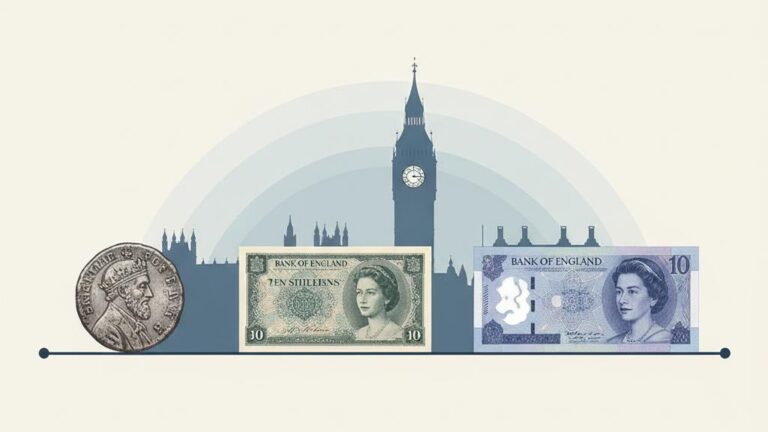
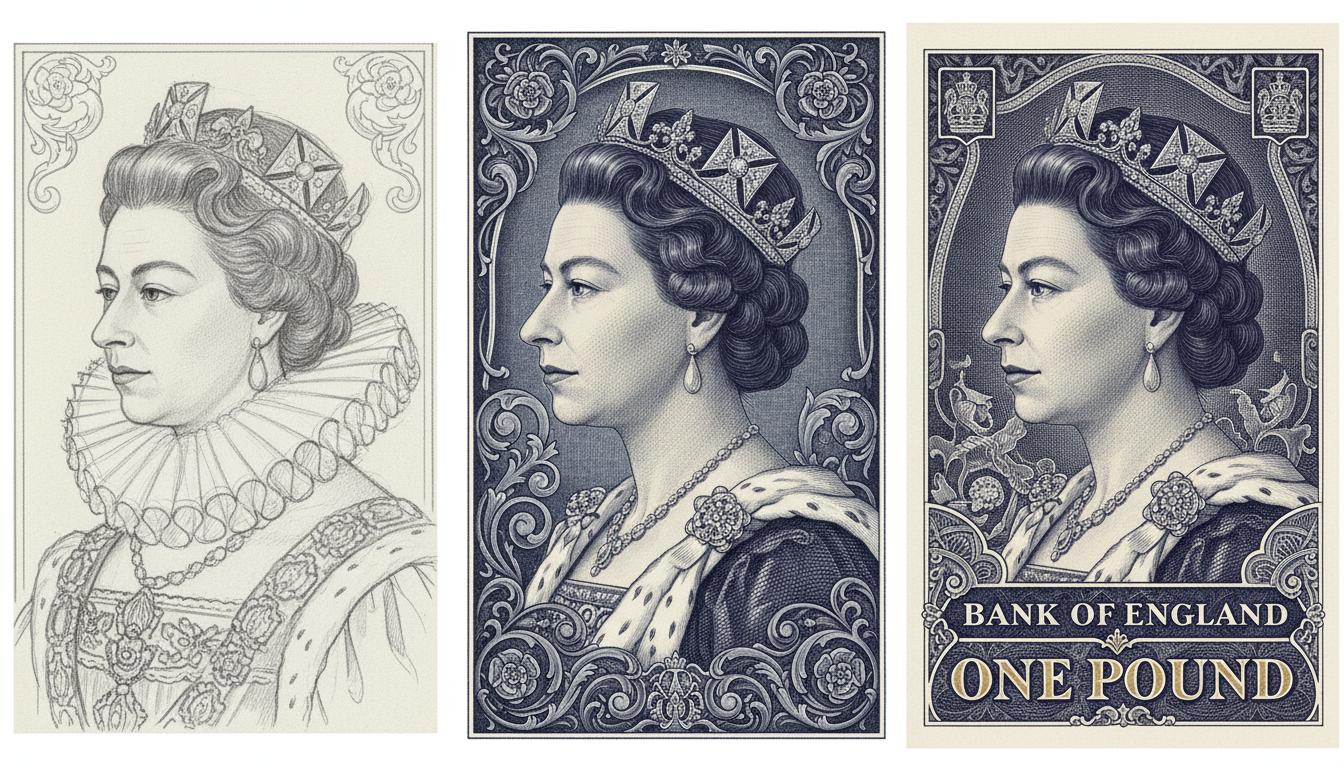
The tradition of featuring the monarchy on pound banknotes began with Queen Elizabeth II. Following formal authorization in 1956, the Bank of England prepared to issue its first-ever notes bearing a sovereign’s portrait. This landmark moment occurred on March 17, 1960, with the release of a new £1 note featuring a young Queen Elizabeth II.
The ten shilling note followed in 1961, cementing this new practice. The inaugural portrait, created by designer Robert Austin, was a formal and elegant depiction. It showed the Queen wearing the Diamond Diadem, a piece of royal regalia famously worn at her coronation in 1953, creating a direct visual link to the authority and tradition of the monarchy.
The Evolving Face of a Monarch
Over her unprecedented 70-year reign, Queen Elizabeth II’s portrait on banknotes was updated several times to reflect her age and the changing aesthetic of the currency. Each portrait marked a new era in design and security.
- Robert Austin (1960): The first portrait, presenting a youthful and formal image of the new monarch.
- Reynolds Stone (1963-64): A slightly more mature and approachable portrait introduced for the new £5 and £10 notes.
- Harry Eccleston (1970s): This series presented a more regal depiction, with the Queen wearing ceremonial robes of the Order of the Garter. This coincided with the introduction of historical figures on the back of notes.
- Roger Withington (1990): The final and most enduring portrait. This dignified and mature image of the Queen was adopted in 1990 and has been the standard ever since, even carrying over to the modern polymer notes introduced in 2016.
As of 2022, there were more than 4.7 billion Bank of England notes in circulation featuring Queen Elizabeth II, with a total value of around £82 billion. This made her image one of the most ubiquitous and recognizable in the world. You can explore the full history of these portraits at the Bank of England Museum’s online collection.
A Global Presence: The Queen on Commonwealth Currency
Queen Elizabeth II’s appearance on currency was not limited to the United Kingdom. Her portrait has graced the banknotes of dozens of other nations, primarily Commonwealth realms and British overseas territories. In fact, she holds the Guinness World Record as the person depicted on the most banknotes worldwide.
Her image has appeared on over 100 different banknotes across more than 20 countries. This global presence underscored her unique role as a head of state for multiple independent nations and as the Head of the Commonwealth. It transformed her portrait from a purely national symbol into an international icon of continuity and shared history.
Beyond the Crown: The History of British Banknote Figures
While the monarch claimed the front of the banknote, the reverse side underwent its own evolution. In the 1970s, the Bank of England began a new tradition of featuring prominent historical figures on the back of its notes. This was a significant design shift, turning each banknote into a small tribute to Britain’s contributions to science, arts, politics, and economics.
Some of the celebrated figures who have appeared on British banknotes include:
- The Duke of Wellington
- William Shakespeare
- Sir Isaac Newton
- Adam Smith
- Winston Churchill
- Jane Austen
- J.M.W. Turner
- Alan Turing
This practice highlights the rich tapestry of British history, complementing the symbol of continuity represented by the monarch on the front. This dual approach to design reflects the evolving story of the British pound sterling itself. It’s also worth noting that while Bank of England notes follow this rule, the design of Scottish and Northern Irish banknotes features a different array of local figures and imagery.
A New Reign, A New Portrait: King Charles III New Banknotes
With the accession of King Charles III, British currency is entering a new chapter. He will become only the second monarch ever to appear on Bank of England banknotes. The Bank of England has confirmed that new notes featuring his portrait are being prepared for release, following a careful process of royal and institutional approval.
This transition will be gradual. To ensure a smooth changeover and minimize environmental and financial impact, notes featuring Queen Elizabeth II will remain legal tender and co-circulate with the new King Charles III notes. This approach respects the legacy of the late Queen while marking the beginning of a new royal era. The change is not just logistical but deeply symbolic, updating the visual identity of the nation’s money for the first time in over 70 years.
Frequently Asked Questions
When did British banknotes first feature a monarch’s portrait?
Bank of England notes first featured Queen Elizabeth II’s portrait in 1960, marking the inaugural appearance of any British monarch on a pound banknote.
How many banknotes feature Queen Elizabeth II worldwide?
Queen Elizabeth II appears on more than 100 different banknotes issued in over 20 countries and territories, a Guinness World Record for the most-featured person on currency, as confirmed by institutions like Guinness World Records.
Who decides the royal portrait used on banknotes?
Portraits are chosen through collaboration between the Bank of England, commissioned artists, and ultimately the royal household, with final approval from the monarch.
Will King Charles III be featured on new pound notes?
Yes, King Charles III will be the second monarch to appear on Bank of England banknotes; new notes bearing his portrait are planned for release pending necessary approvals.
Are Queen Elizabeth II banknotes still legal tender?
Yes, banknotes featuring Queen Elizabeth II will continue to circulate and remain legal tender for years after King Charles III’s notes are issued to ensure a gradual transition.
Conclusion: A Modern Tradition Continues
The presence of the monarchy on pound banknotes is a powerful symbol of British identity, yet it is a tradition born in the modern era. Queen Elizabeth II was the pioneer, her image evolving from a young monarch to a globally recognized stateswoman over seven decades. Her portrait not only guaranteed the value of the currency but also connected the public to the continuity of the Crown.
Now, as the nation prepares for the circulation of notes featuring King Charles III, this modern tradition enters its next phase. It continues the practice of blending historical legacy with contemporary identity, ensuring that the sovereign remains a familiar presence in the daily lives of millions.