Historical Use of Devaluation and Revaluation as Exchange Rate Tools
For over a century, governments have wielded a powerful and often controversial tool to manage their economies: deliberately changing the value of their own money. The currency devaluation history is filled with dramatic events where nations intentionally weakened their currency to gain a competitive edge, alongside rarer instances of strengthening it through revaluation. This strategic manipulation has been used to boost exports, correct trade imbalances, and navigate severe economic crises.
Understanding this history reveals how these policies can offer short-term relief but also risk spiraling into hyperinflation, sparking international “currency wars,” and eroding public wealth. From the collapse of the gold standard to modern financial meltdowns, the deliberate adjustment of exchange rates remains a critical, high-stakes element of global economics. This article explores the historical use of devaluation and revaluation, highlighting key periods and events that shaped our modern financial world.
What Are Devaluation and Revaluation?
Before diving into history, it’s crucial to understand the core concepts. These terms describe deliberate actions by a country’s government or central bank, typically under specific monetary systems.
Devaluation: A Deliberate Downward Push
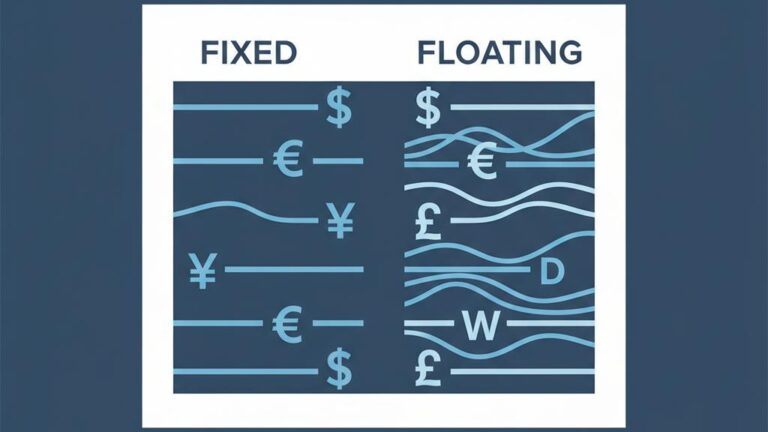
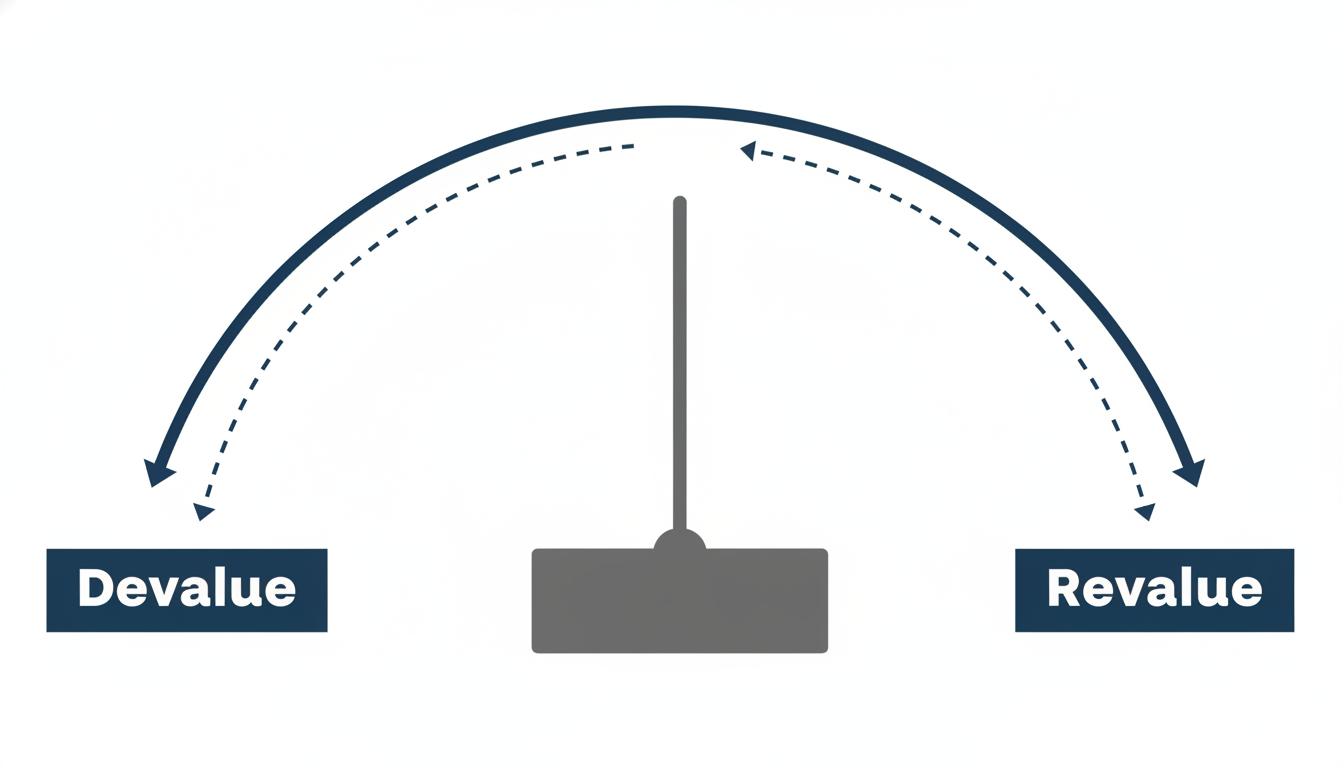
Devaluation is a formal, downward adjustment of a currency’s official value. This tool is most relevant in countries with a fixed or pegged exchange rate regime, where the government sets a specific value for its currency against another currency (like the U.S. dollar) or a commodity (like gold).
The primary goals of devaluation are often to:
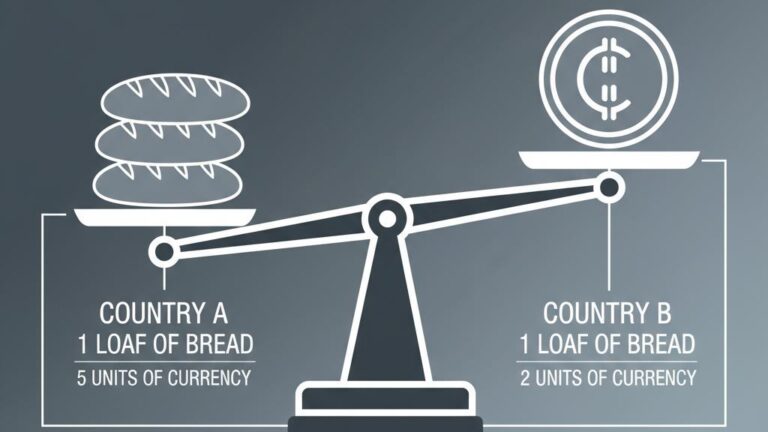
- Boost Exports: A weaker currency makes a country’s goods and services cheaper for foreign buyers, increasing demand.
- Reduce Imports: Foreign goods become more expensive for domestic consumers, encouraging them to buy local products.
- Correct a Trade Deficit: By boosting exports and curbing imports, devaluation can help close the gap between what a country sells and what it buys.
It is important to distinguish devaluation from depreciation. While both mean a currency loses value, devaluation is an official government act, whereas depreciation is a market-driven decline in value within a floating exchange rate system.
Revaluation: The Opposite and Rarer Move
Revaluation is the opposite of devaluation. It is a deliberate upward adjustment of a currency’s official value. This action is far less common because a stronger currency can make exports more expensive and potentially harm a country’s trade competitiveness.
Revaluation typically occurs when a country has a persistent trade surplus, is facing external pressure to strengthen its currency, or is implementing currency reforms. Like devaluation, it is a tool used within a pegged exchange rate system.
A Tumultuous Currency Devaluation History: The Gold Standard Era
The early 20th century marked a pivotal shift in how nations managed their currencies. While the classical gold standard provided a period of relative stability, its breakdown during the Great Depression unleashed a wave of devaluations that reshaped the global economy.
The Great Depression’s Devaluation Cascade
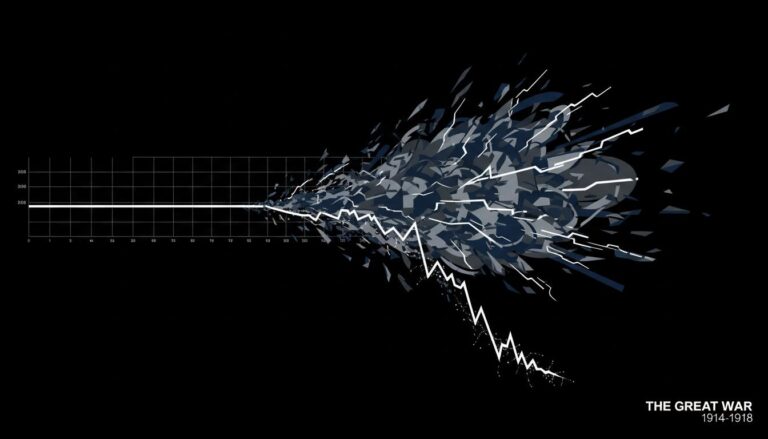
The economic turmoil following World War I and the onset of the Great Depression put immense pressure on the gold standard. In 1931, Britain made the monumental decision to abandon the gold standard, allowing the pound sterling to devalue. This move triggered a domino effect.
Between 1930 and 1938, at least 20 countries, including France, Greece, and Spain, devalued their currencies by more than 10%. These actions provided temporary relief from deflation but ultimately contributed to global instability. This period saw the rise of what became known as “beggar-thy-neighbor” policies, where countries devalued their currencies to steal trade advantages from one another, leading to a vicious cycle of retaliation that worsened the depression.
Extreme Devaluation: The Weimar Republic
Perhaps the most infamous example of currency collapse from this era is Germany’s Weimar Republic in the early 1920s. Facing crippling war reparations and economic collapse, the government resorted to printing money uncontrollably. The result was hyperinflation that reached a staggering 29,500% per month, rendering the German Papiermark effectively worthless and wiping out the savings of an entire generation.
Post-War Stability and the Bretton Woods Collapse (1944–1971)
To prevent a repeat of the 1930s chaos, Allied nations met in 1944 to create the Bretton Woods system. This new order established a period of managed stability but eventually succumbed to its own internal pressures, leading to one of the most significant devaluations in modern history.
A Dollar-Pegged System
The Bretton Woods system pegged major global currencies to the U.S. dollar, which in turn was convertible to gold at a fixed rate of $35 per ounce. This created an era of predictable exchange rates and facilitated post-war reconstruction and trade. Under this system, countries could perform a revaluation of currency history by officially adjusting their peg against the dollar, but the dollar itself was the anchor.
However, this system placed immense pressure on the United States. Growing U.S. budget deficits, fueled by war spending and domestic programs, led to inflation and eroded confidence in the dollar’s gold backing.
The ‘Nixon Shock’ and the Dollar’s Devaluation
On August 15, 1971, President Richard Nixon unilaterally suspended the dollar’s convertibility to gold. This “Nixon Shock” effectively ended the Bretton Woods system. Without the gold anchor, the U.S. dollar began to float freely, and by the end of the decade, it had depreciated by nearly 30%.
The end of Bretton Woods ushered in the modern era of floating exchange rates for most major economies. It also marked an acceleration in the dollar’s long-term loss of value. Since the creation of the Federal Reserve in 1913, the U.S. dollar has lost over 97% of its purchasing power, with a significant portion of that decline occurring after 1971.
Modern Crises: Lessons from Recent Devaluations
The post-Bretton Woods era has been marked by more frequent currency fluctuations and several devastating historical currency crises. These events show that severe devaluation remains a potent threat, particularly for emerging economies with pegged currencies and weak fundamentals.
Mexico’s ‘Tequila Crisis’ (1994)
In late 1994, the Mexican government’s attempt at a controlled devaluation of the peso backfired spectacularly. A sudden loss of investor confidence triggered a massive capital flight, causing the peso to collapse by over 50%. The crisis required an international bailout to prevent a complete economic meltdown.
The East Asian Financial Crisis (1997)
The crisis began in July 1997 when Thailand, facing immense speculative pressure, was forced to devalue its currency, the baht. As detailed by the Federal Reserve History organization, the crisis quickly spread across the region. The Indonesian rupiah lost more than 80% of its value, and other currencies in Malaysia, South Korea, and the Philippines declined by 30% or more, causing widespread economic devastation.
Hyperinflationary Collapses: Zimbabwe and Venezuela
Two recent examples highlight the catastrophic potential of uncontrolled devaluation:
- Zimbabwe (2000s): The government’s policy of land expropriation and rampant money printing led to hyperinflation that peaked at an estimated 89.7 sextillion percent (89,700,000,000,000,000,000,000%) year-on-year in mid-November 2008. The Zimbabwean dollar was ultimately abandoned.
- Venezuela (2013–2020): A combination of economic mismanagement, political instability, and collapsing oil prices caused the Venezuelan bolívar to lose over 99% of its value, triggering a humanitarian crisis.
Experts note that these crises often follow a pattern: a gradual decline, a rapid acceleration, and then a total collapse as public confidence evaporates. Governments frequently respond with price controls or capital controls, which can inadvertently hasten the currency’s demise.
Competitive Devaluation Explained: The ‘Currency Wars’ Phenomenon
When multiple countries engage in devaluation simultaneously to boost their own economies at the expense of others, it can lead to what is known as a “currency war.” This is a modern term for the “beggar-thy-neighbor” policies of the 1930s.
The Currency Wars History of the 1930s
The 1930s serve as the primary historical example of full-blown currency wars. As countries left the gold standard, they engaged in a series of retaliatory devaluations. According to analysis from the Carnegie Endowment for International Peace, this created a “vicious circle” that deepened the Great Depression by eroding global trade and trust.
The Plaza Accord: A Rare Case of Cooperation
In contrast to the destructive competition of the 1930s, the 1985 Plaza Accord stands out as a rare example of coordinated action. The United States, Japan, West Germany, France, and the UK agreed to work together to devalue the U.S. dollar against the Japanese yen and German Deutsche Mark to address the large U.S. trade deficit. This was a managed, multilateral rebalancing rather than a competitive free-for-all.
Frequently Asked Questions
What is the difference between currency devaluation and depreciation?
Devaluation is a deliberate, official reduction in a currency’s value by a government operating under a fixed or pegged exchange rate system. Depreciation is a market-driven decline in a currency’s value in a floating exchange rate system.
What are some historical examples of major currency devaluations?
Key examples include Britain leaving the gold standard in 1931, the U.S. dollar’s depreciation after the 1971 “Nixon Shock,” Mexico’s 1994 peso crisis, the 1997 Asian financial crisis, Zimbabwe’s hyperinflation in 2008, and Venezuela’s bolívar collapse from 2013–2020.
What is competitive devaluation and when does it occur?
Competitive devaluation, or “currency wars,” occurs when multiple countries devalue their currencies around the same time to gain a trade advantage. This often leads to a destructive cycle of retaliation that can harm the global economy, as seen during the 1930s.
Why do governments devalue currencies?
Governments devalue currencies primarily to make their exports cheaper and more competitive, correct trade deficits, manage national debt, and respond to economic crises. However, this policy risks triggering high inflation and eroding citizens’ savings.
How has the US dollar’s value changed over time?
The U.S. dollar has lost over 97% of its purchasing power since 1913. Its value was relatively stable under the gold-backed Bretton Woods system, but its devaluation accelerated significantly after the U.S. formally abandoned the gold standard in 1971.
Conclusion
The history of currency devaluation and revaluation shows they are powerful economic tools with significant risks. While a deliberate devaluation can provide a temporary economic stimulus, it can also lead to runaway inflation, social unrest, and international conflict. From the competitive devaluations of the Great Depression to the hyperinflationary collapses of the 21st century, these events serve as a stark reminder of the importance of sound monetary policy and public confidence.
History demonstrates that while controlled adjustments are sometimes necessary, uncontrolled devaluations can rapidly destroy wealth and destabilize entire regions. Understanding these past events is essential for navigating the complexities of historical exchange rates and appreciating the forces that continue to shape our global financial system.