The Historical Link Between War, Debt, and Fiat Currency
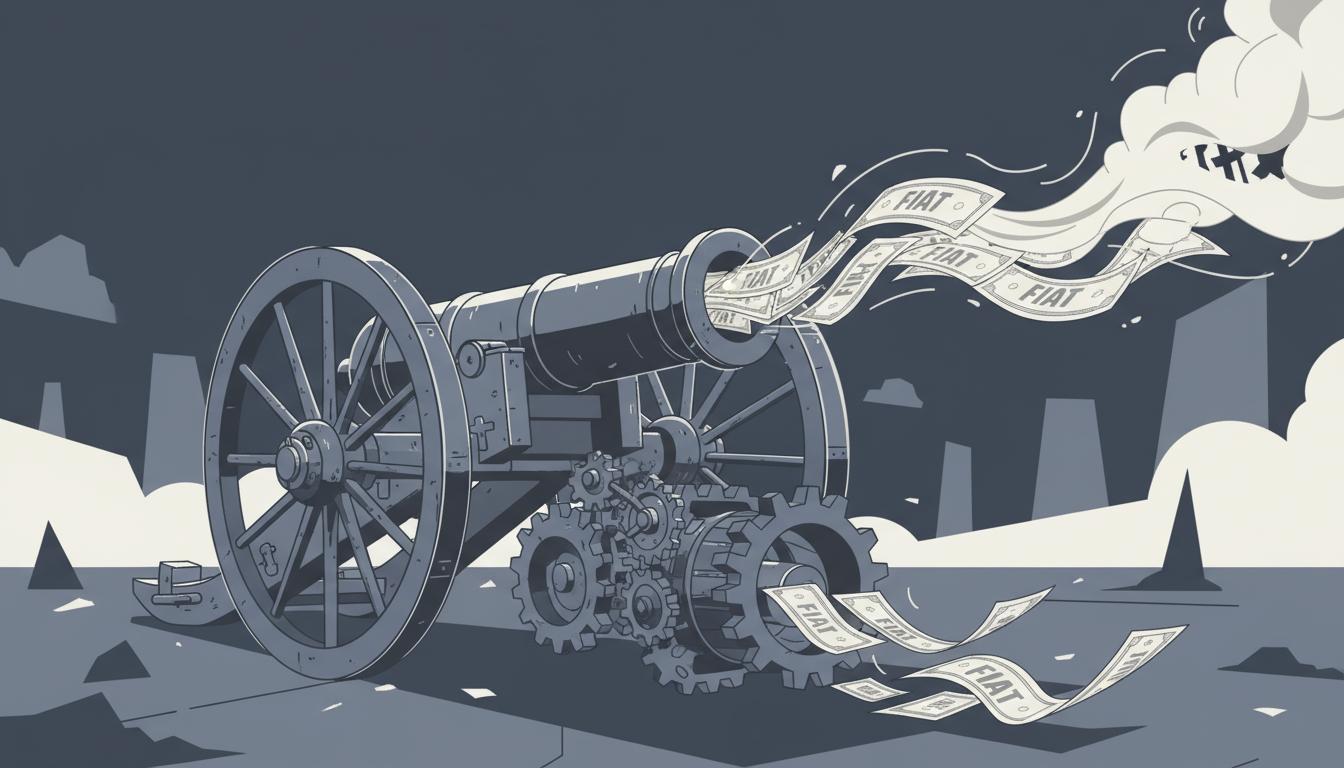
Throughout human history, wars have been waged not just with soldiers and steel, but with money. The immense cost of military conflict has consistently forced governments to find creative and often drastic ways to fund their campaigns. This pressure has repeatedly forged a powerful connection between conflict, national debt, and monetary innovation.
The intricate war debt fiat currency history reveals a recurring pattern: when faced with the existential need to fund a war, nations often abandon the constraints of commodity-backed money like gold and turn to paper currency, debt, and money printing. This article explores how financing wars with paper money has shaped our modern financial systems, from early colonial conflicts to the global fiat standard we live with today.
What Is Fiat Currency? A Quick Refresher
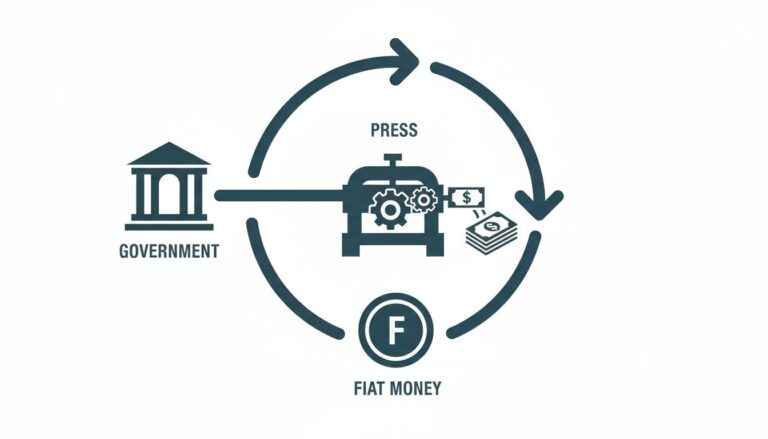
Before diving into the historical examples, it’s important to understand what fiat currency is. Simply put, fiat currency is money issued by a government that is not backed by a physical commodity like gold or silver.
Its value comes from two key sources:
- Government Decree: The government declares it to be legal tender.
- Public Confidence: The people and institutions using the money trust that it will hold its value.
While the modern global financial system runs on fiat money, the concept is not new. The earliest known use of government-issued paper banknotes dates back to 7th-century China. However, its widespread adoption was largely driven by the extreme financial pressures of war.
The Inevitable Link: Why War Demands More Than Gold
For centuries, the gold standard provided monetary discipline and predictable exchange rates. The amount of money a government could create was limited by its physical gold reserves. While this system offered stability in peacetime, it became a significant constraint during major wars.
Military conflicts demand massive, immediate injections of cash to pay for soldiers, weapons, and supplies. Gold and silver reserves were often insufficient, difficult to transport, and too slow to mobilize for the rapid needs of a war economy. This forced governments to find a more flexible funding mechanism, leading them to the printing press.
Historical Case Studies: Financing Wars with Paper Money
The history of war finance is filled with examples of governments turning to paper money and debt when their coffers ran dry. These episodes illustrate a clear pattern of prioritizing immediate liquidity over long-term monetary stability.
The Seven Years’ War (1756–1763)
An early example of this dynamic occurred in New France (modern-day Canada). To cover the costs of the Seven Years’ War, French colonial authorities issued large amounts of paper money. After France’s defeat by the British, this currency, no longer backed by a credible government, suffered from rampant inflation and lost its value. Gold and silver quickly resurfaced as the only stable mediums of exchange.
The American Revolutionary War
To fund the fight for independence, the U.S. Continental Congress and individual colonies also turned to debt and paper money. The Continental Congress printed money known as “Continentals” to pay soldiers and purchase supplies. Without a strong central authority to back them or control their issuance, these notes eventually became nearly worthless, giving rise to the phrase “not worth a Continental.”
The U.S. Civil War (1861-1865)
The U.S. Civil War marked a pivotal moment in the war debt fiat currency history. To finance its immense war effort, the Union government took several unprecedented steps:
- It issued “greenbacks,” a form of fiat currency not backed by gold or silver (specie).
- It successfully sold massive amounts of war bonds to the public, framing the purchase as a patriotic duty.
This strategy was effective in funding the war, but it came at a staggering cost. By the end of the conflict, the U.S. national debt had ballooned by more than 41 times its pre-war level.
The World Wars and the Rise of War Bonds
The sheer scale of World War I and World War II dwarfed all previous conflicts, requiring an unparalleled level of economic mobilization. The history of war bonds and currency during this era shows governments perfecting the art of public financing.
In the United States, the government launched massive campaigns to sell “Liberty Bonds” to the public during WWI. These drives were incredibly successful, raising approximately $17 billion for the war effort. War bonds became synonymous with civic participation, allowing governments to tap into civilian savings to fund military expenditures on an industrial scale.
From Gold to Fiat: How War Officially Ended the Gold Standard
While wars repeatedly forced temporary suspensions of commodity-backed money, the 20th century’s conflicts ultimately led to its permanent abandonment.
World War I was the catalyst. To fund the immense costs, nations like Great Britain were forced to suspend the gold standard, relying heavily on state-promoted paper notes. This marked the true beginning of the modern fiat era, as governments realized the power of controlling their own money supply to meet national priorities.
After WWII, the Bretton Woods Agreement established a new system where the U.S. dollar, backed by gold, became the world’s reserve currency. However, the costs of the Vietnam War and expanding domestic social programs led the U.S. to print more dollars than it could back with its gold reserves. This culminated in the “Nixon Shock” of 1971, when President Richard Nixon officially ended the direct convertibility of the U.S. dollar to gold. This decision effectively severed the last link to the gold standard and ushered in the global fiat system we use today.
The Role of Central Banks: Money Printing for War Explained
The ability of governments to finance wars with debt and paper money was greatly enhanced by the creation of central banks. Institutions like the U.S. Federal Reserve, founded in 1913, became essential enablers of war finance.
Central banks facilitated wartime spending in several key ways:
- Expanding the Monetary Base: They could increase the supply of money and credit in the economy to meet the government’s needs.
- Marketing Bonds: They helped manage and market massive government bond sales, ensuring the government had the funds it needed.
- Acting as a Lender: They could directly lend money to the government, effectively monetizing its debt.
During both WWI and WWII, the Federal Reserve played a crucial role in financing U.S. expenditures through these mechanisms. However, this large-scale expansion of the money supply directly contributed to significant post-war inflation.
The Enduring Consequence: Military Spending and Inflation
The connection between large-scale military spending and inflation is one of the most consistent lessons from economic history. When a government finances a war by printing money, it increases the amount of currency in circulation without a corresponding increase in the production of consumer goods. This imbalance—more money chasing the same amount of goods—inevitably drives prices up.
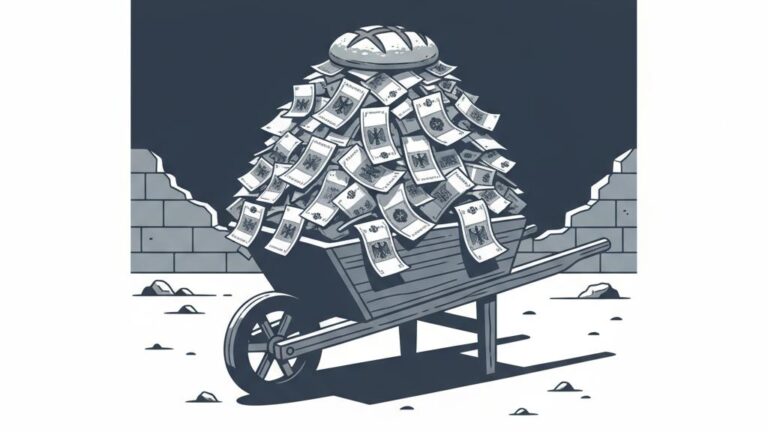
In extreme cases, this can lead to hyperinflation, as famously seen in the Weimar Republic in Germany after WWI. Crippled by war reparations and a struggling economy, the government resorted to printing money on a massive scale, destroying the currency’s value and causing devastating social and economic instability.
Even when it doesn’t lead to hyperinflation, debt-financed war spending has lasting effects. It saddles nations with enormous debts that can take generations to pay down. Furthermore, the resulting inflation can erode savings, destabilize economies, and even undermine a nation’s global economic standing, as seen with the British pound losing its reserve currency status after the immense costs of the two World Wars.
Frequently Asked Questions
How have wars historically influenced the transition from commodity-backed currencies to fiat money?
Wars have compelled governments to suspend gold convertibility and rely on fiat currency, as commodity-backed money was insufficient for wartime expenses. The need for rapid liquidity and flexible funding mechanisms led to widespread adoption of paper money during major conflicts like WWI and WWII.
What was the role of war bonds in financing military expenditures?
War bonds allowed governments to raise significant funds from civilians, financing military expenditure while promoting civic participation. The U.S. raised about $17 billion in Liberty Bonds during World War I, demonstrating their effectiveness as a funding tool.
Does printing money for war always cause inflation or hyperinflation?
While printing money for wars often leads to inflation, not all cases result in hyperinflation. Extreme examples, like Weimar Germany after WWI, saw hyperinflation, but other nations have managed inflation through careful monetary policy and post-war fiscal discipline.
How did the end of the gold standard affect global monetary systems?
The shift away from the gold standard, particularly after the Nixon Shock in 1971, resulted in most of the world’s currencies becoming fiat money. This allowed for more flexible monetary policies but also increased vulnerability to inflation and currency crises driven by government debt.
Conclusion: The Unbreakable Link
The history of money is inextricably linked with the history of conflict. The immense fiscal pressure of war has consistently acted as a catalyst, pushing governments to abandon the rigid discipline of commodity-backed currencies in favor of the flexibility of fiat money. From the paper notes of colonial France to the greenbacks of the Civil War and the global severing of the link to gold in 1971, military necessity has been the mother of monetary invention.
This historical pattern underscores a fundamental tension that persists today. The need to fund national priorities, especially defense, often conflicts with the goal of long-term monetary stability. Understanding the war debt fiat currency history is essential for grasping the forces that have shaped, and continue to shape, our modern financial world.