The Role of the US Dollar in the Collapse of the Gold Standard

For decades, the global financial system was anchored by a seemingly unshakable promise: the value of money was tied directly to gold. This gold standard provided stability, but its eventual unraveling was one of the most significant monetary shifts of the 20th century. At the heart of this dramatic change was a single currency whose unique position created both the system’s strength and its fatal flaw.
The us dollar role in gold standard collapse was not that of a passive victim but of the central player whose international responsibilities became impossible to sustain. The very architecture that made the dollar the world’s premier currency ultimately forced the United States to unilaterally dismantle the system, ushering in the modern era of money we know today.
The Bretton Woods System: Placing the US Dollar at the Center of the World
After the devastation of World War II, global leaders sought to create a new international monetary system that would foster economic stability and prevent the competitive devaluations that plagued the pre-war era. The result was the 1944 Bretton Woods Agreement, which established a new form of the gold standard with the U.S. dollar as its lynchpin.
Under this arrangement, the dollar was elevated to the status of the world’s primary reserve currency. This was based on a critical commitment from the United States:
- Direct Gold Convertibility: The U.S. government guaranteed that it would exchange U.S. dollars for gold at a fixed rate of $35 per ounce for foreign central banks.
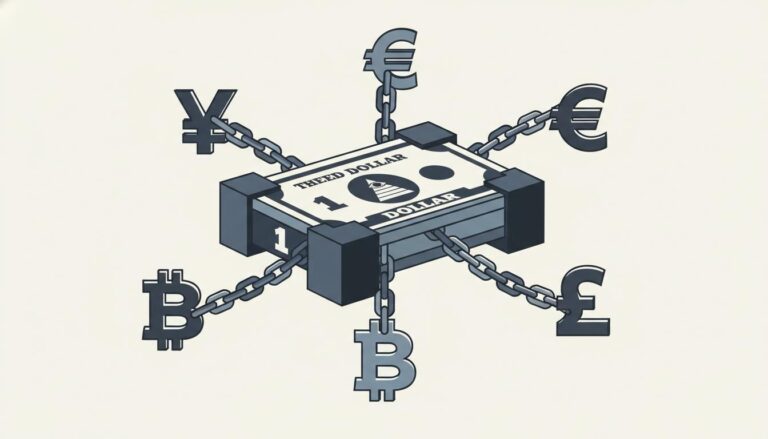
- A Pegged System: Other countries would peg their currencies’ exchange rates to the U.S. dollar, rather than directly to gold.
This system effectively created a gold-dollar standard. The dollar was considered “as good as gold” because of its convertibility, providing a stable and liquid asset for international trade and reserves.
Cracks in the Foundation: The US Dollar Role in Gold Standard Collapse Begins
Throughout the 1960s, the foundation of the Bretton Woods system began to show serious signs of strain. The privileged position of the dollar came with immense pressure, and a series of domestic and international factors started to erode confidence in the United States’ ability to honor its gold promise.
Mounting Economic Pressures
Several key economic developments in the U.S. contributed to the growing instability:
- Wartime Spending: The escalating costs of the Vietnam War required significant government expenditure, pumping more dollars into the global economy.
- Domestic Programs: President Lyndon B. Johnson’s “Great Society” initiatives involved increased domestic spending on social welfare programs.
- Relaxed Monetary Policy: To finance these costs without raising taxes significantly, the U.S. pursued an expansionary fiscal and monetary policy, which led to inflation and a persistent balance-of-payments deficit.
This meant the U.S. was sending far more dollars abroad than it was taking in. The quantity of dollars held in foreign reserves swelled, while America’s gold reserves remained stagnant or declined.
The Triffin Dilemma Explained: A Paradox at the System’s Core
The fundamental flaw in the Bretton Woods system was best articulated by economist Robert Triffin in the 1960s. The Triffin dilemma explained the inherent conflict facing the United States as the issuer of the world’s reserve currency.
The paradox was this:
- For the global economy to grow, it needed an increasing supply of U.S. dollars to finance trade and serve as reserves. This required the U.S. to run persistent balance-of-payments deficits.
- However, as foreign-held dollars accumulated, they would inevitably exceed the value of the U.S. gold stock. This would undermine confidence in the dollar’s convertibility and could trigger a run on U.S. gold reserves.
Essentially, the U.S. had to choose between providing global liquidity (by printing more dollars) and maintaining confidence in the dollar’s gold backing. It could not do both indefinitely. By the late 1960s, this theoretical problem had become a very real crisis.
The Breaking Point: A Global Run on U.S. Gold
As foreign governments watched the number of dollars they held grow while U.S. gold reserves dwindled, their confidence began to waver. They grew increasingly wary of the dollar’s stability and started to act on their right to exchange those dollars for gold at the promised $35-per-ounce rate.
Countries like France became particularly aggressive in redeeming their dollar holdings for physical gold, severely depleting U.S. reserves. The United States was hemorrhaging gold. Attempts at international cooperation, such as creating gold pools among central banks and establishing reciprocal currency “swap lines,” were temporary fixes that delayed the crisis but could not solve the fundamental imbalance described by the Triffin dilemma.
By 1971, the situation was untenable. The U.S. gold stock was insufficient to cover its international dollar obligations, and the world knew it.
The Nixon Shock: The End of Dollar-Gold Convertibility
On August 15, 1971, President Richard Nixon made a stunning televised announcement that would change the course of financial history. In what became known as the Nixon Shock, he declared that the United States would unilaterally and “temporarily” suspend the convertibility of the dollar into gold.
While framed as a temporary measure to counter speculators and pressure trading partners to revalue their currencies, the move effectively shattered the central pillar of the Bretton Woods system. The end of dollar-gold convertibility marked the beginning of the end for the gold standard itself.
This decision, detailed by institutions like the Federal Reserve, was a pragmatic response to an unstoppable drain on U.S. gold. It shifted the entire world away from a system of currencies backed by a physical commodity and toward one based on government decree: fiat currencies.
Dollar Devaluation 1971 and the Final Collapse
In a last-ditch effort to save the system of fixed exchange rates, the Smithsonian Agreement was signed in December 1971. This agreement included a formal dollar devaluation 1971, raising the official price of gold from $35 to $38 per ounce.
However, this patched-up system failed to hold. Market pressures were too strong, and the core issue of trust had been broken. The U.S. devalued the dollar again in 1973, raising the price of gold to $42.22 per ounce, but it was too little, too late. By 1973, major world currencies began to “float,” with their values determined by market forces rather than a fixed peg. In 1976, the U.S. made the abandonment of the gold standard official, fully decoupling the dollar from gold.
The Legacy: Stagflation, Volatility, and the Modern Fiat Era
The immediate effects of severing the dollar-gold link were dramatic and destabilizing. The 1970s were characterized by:
- High Market Volatility: Currency and gold markets experienced intense fluctuations as they adjusted to the new floating-rate regime. The price of gold skyrocketed from $35 to over $180 per ounce by the end of 1974.
- Stagflation: The U.S. and much of the world experienced a painful combination of high inflation and stagnant economic growth, a phenomenon known as stagflation.
- A New Monetary Order: The world fully entered the era of fiat money, where the value of a currency like the dollar is backed only by the “full faith and credit” of the government that issues it. Explore more on the transition from gold convertibility to paper currency here.
The dollar’s role remains unique. Despite being untethered from gold, it is still the world’s dominant reserve currency. However, its value is now subject to cycles of strength and weakness driven by economic and political pressures, particularly government spending and central bank interest rate policies, a reality analyzed by bodies like the International Monetary Fund.
Frequently Asked Questions
What caused the collapse of the gold standard and how was the US dollar involved?
The collapse was caused by mounting U.S. economic pressures from wartime spending and expansionary fiscal and monetary policy, which led to an excessive supply of dollars abroad. This, combined with a loss of foreign confidence, forced the U.S. to suspend the dollar’s convertibility to gold in 1971, effectively ending the Bretton Woods system and making the dollar a fiat currency.
What is the Triffin dilemma?
The Triffin dilemma describes the conflict where the U.S. had to supply enough dollars for global liquidity, which required running deficits, but doing so risked exhausting U.S. gold reserves and undermining global confidence in the dollar’s convertibility to gold.
What was the Nixon shock?
The Nixon shock refers to President Nixon’s unilateral announcement on August 15, 1971, that the U.S. would suspend the convertibility of the dollar into gold. This move led directly to the collapse of the gold standard and the global shift toward fiat currencies.
What were the effects of ending the gold standard?
Ending the gold standard led to floating currency exchange rates, increased market volatility, and a sharp rise in the price of gold. It also contributed to the high inflation and economic stagnation (stagflation) of the 1970s and solidified the U.S. dollar’s position as the world’s primary reserve currency, but without any gold backing.
Conclusion: The Dollar’s Pivotal Role in Monetary History
The story of the gold standard’s demise is inextricably linked with the story of the U.S. dollar’s rise and the inherent contradictions of its global role. The Bretton Woods system placed the dollar at the center of the world’s finances, but this privileged position created unsustainable pressures. The Triffin dilemma, massive U.S. deficits, and the eventual run on gold made the collapse all but inevitable.
President Nixon’s 1971 decision was not the cause of the collapse but rather the final acknowledgment that the system was broken. This event fundamentally reshaped international finance, creating the modern era of floating fiat currencies. The dollar’s unique journey through this period cemented its complex legacy as both the anchor of the old system and the catalyst for the new one.