The History of Japanese War Scrip and Military Yen
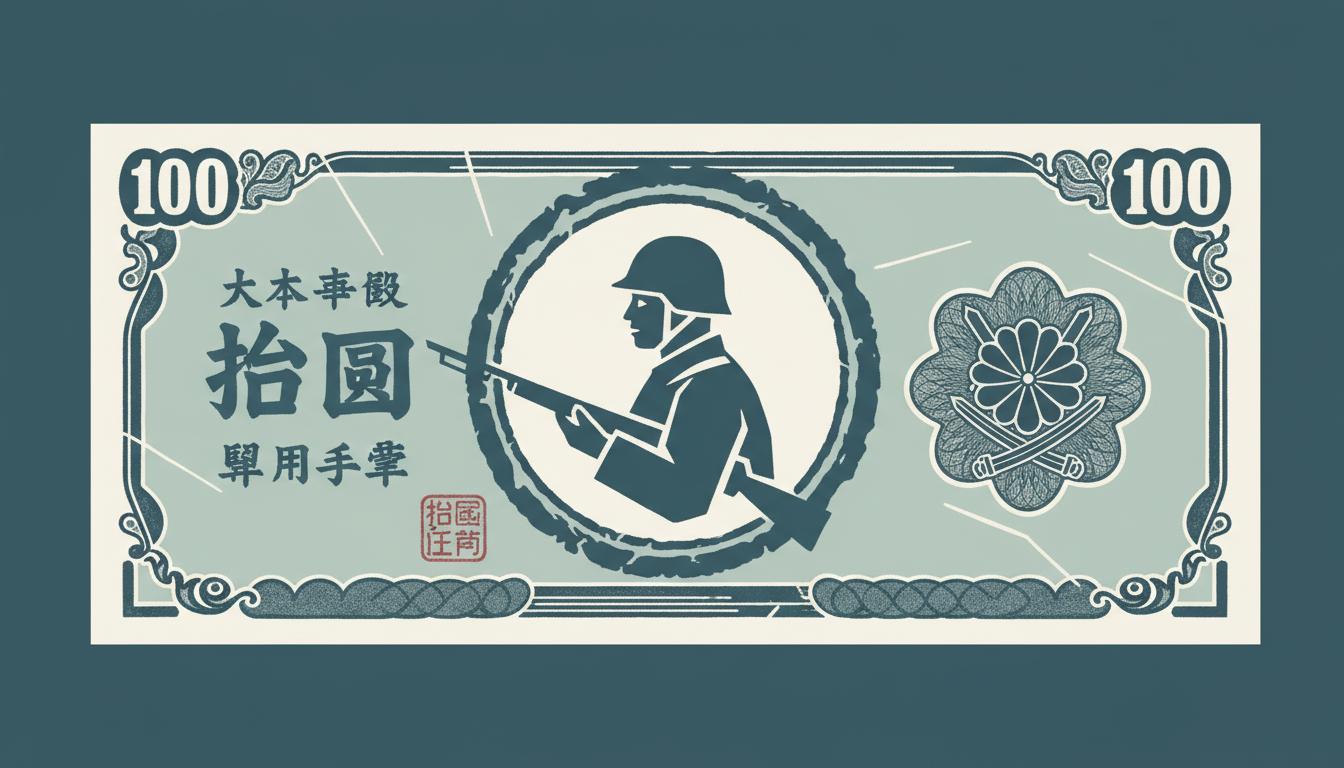
During the vast conflicts of the 20th century, money was not just a medium of exchange; it was a weapon. The japanese war scrip history of World War II offers a stark example of how currency can be used to control populations, extract resources, and finance military expansion. Issued by the Japanese government between 1937 and 1945, these occupation currencies, known as military yen or Japanese Invasion Money (JIM), became instruments of economic domination across Asia and the Pacific.
This currency was a fiat money system imposed on conquered territories, forcing local populations to abandon their own currencies for paper notes with no backing in gold or hard assets. This strategy allowed Japan to fund its vast war machine by effectively exporting inflation to the nations it occupied. The story of this scrip is one of economic manipulation, widespread hardship, and a legacy of unresolved financial claims that persists to this day.
Understanding Japanese War Scrip: Key Concepts Explained
To grasp the full impact of Japan’s wartime monetary policy, it’s essential to understand the different terms used to describe this occupation currency. While often used interchangeably, they refer to specific aspects of a broader economic strategy.
Military Yen Explained
The Japanese military yen (Nippon gunyō shihyō) was a special currency issued directly by the Imperial Japanese Armed Forces. Initially intended for military personnel, its role quickly expanded. Upon occupying a territory, the Japanese government would declare the military yen as the sole legal tender, forcing local inhabitants to use it for all transactions and displacing established colonial or national currencies.
Scrip Money in Occupied Territories
More broadly, scrip money in occupied territories refers to any non-standard currency issued by an occupying force. Japanese scrip was printed in massive quantities and was often of poor quality, sometimes lacking serial numbers. This scrip was forced upon millions in China, Southeast Asia, the Philippines, and various Pacific islands, replacing their pre-war money and tying their economic fates directly to the Japanese war effort.
Japanese Invasion Money (JIM)
Japanese Invasion Money (JIM) is the umbrella term for all forms of currency Japan issued in occupied lands. This includes the military yen as well as scrip denominated in local units to create a semblance of familiarity. For example, Japan issued pesos in the Philippines and dollars in Malaya, but these notes were controlled and printed by the Japanese military government and enforced through strict legal tender laws.
The History of Japanese War Scrip During WWII
The issuance of Japanese military currency began in 1937 with Japan’s campaigns in China. It became a cornerstone of its economic policy as the empire expanded rapidly across the Pacific following the attacks of 1941.
Issuance and Economic Strategy
The primary purpose of the military yen and other scrip was to allow Japan to commandeer local resources without spending its own gold reserves or hard currency. By simply printing money, the Japanese military could pay its troops, purchase raw materials, and control the economies of captured territories. This system financed the occupation through engineered inflation, placing the economic burden squarely on the shoulders of the occupied populations. The evolution of the yen itself has deep roots, stemming from the Meiji Restoration and the birth of the yen as a modern currency.
Currency During WWII Pacific Campaign and Hyperinflation
As the war progressed, Japan printed scrip with increasing abandon. This massive oversupply, combined with dwindling public confidence, led to severe inflation and, in many cases, hyperinflation. The economic consequences were devastating for local populations whose savings and wages became worthless.
- In Hong Kong, the exchange rate was forcibly altered from two local dollars for one military yen to four-to-one within just ten months. By 1944, the economy was in chaos as faith in the currency evaporated.
- In the Philippines, peso-denominated scrip replaced pre-war currencies, leading to a catastrophic loss of value.
- Across Southeast Asia, including Burma, Malaya, and the Dutch East Indies, the Japanese issued rupees, dollars, and guldens that ultimately collapsed.
Economic historians, as detailed in research from Cambridge University Press, note that this strategy was a deliberate tool for resource extraction funded by inflation rather than taxation.
Allied Counterfeiting and Propaganda
Recognizing the fragility of Japan’s fiat currency system, Allied forces actively worked to undermine it. They engaged in large-scale counterfeiting of Japanese invasion notes and airdropped them into occupied territories. This act of economic warfare was designed to accelerate inflation, erode public trust, and weaken Japan’s economic control. Allied propaganda leaflets often accompanied these drops, questioning the value of Japan’s “Greater East Asia Co-Prosperity Sphere.”
The Aftermath: A Worthless Currency and Unsettled Claims
When Japan surrendered in August 1945, the entire system of military scrip collapsed overnight. The consequences were immediate and profound for the millions of people left holding the now-worthless notes.
Declared Void Without Compensation
Following the surrender, Japan’s Ministry of Finance declared all military yen and invasion scrip void. This single act rendered billions of yen, pesos, and dollars worthless, wiping out the savings of entire populations. In Hong Kong alone, an estimated 1.2 billion military yen were in circulation; Japanese authorities intentionally destroyed 880 million yen before the surrender to limit potential postwar claims. The economic rebuilding that followed saw a return to previous currencies, including the Japanese yen during the post-war occupation under Allied administration.
Legal Ramifications and Denied Restitution
In the decades since the war, individuals and governments from formerly occupied territories have repeatedly sought compensation for their losses. However, these efforts have been largely unsuccessful. Japanese courts have consistently ruled against plaintiffs, and the Japanese government has cited post-war treaties, such as the Treaty of San Francisco, as having settled all monetary claims. As explained by the National Park Service, the legacy of wartime currencies often involves complex legal and emotional histories.
The Lasting Legacy of Japanese Invasion Money
The story of Japanese war scrip remains a contentious issue in East Asia, serving as a painful reminder of economic exploitation during the war. While the notes themselves have no monetary value, they hold significant historical weight. Today, Japanese Invasion Money is collected by numismatists and historians as artifacts of occupation and economic warfare.
These notes are tangible evidence of a time when currency was used to control, commandeer, and ultimately devastate local economies. They underscore how the administration of money is a critical component of military occupation, a lesson seen in later conflicts with the use of scrip like the U.S. “A yen.” The episode highlights the profound and lasting trauma inflicted when a nation’s economic sovereignty is stripped away.
Frequently Asked Questions
What was the Japanese military yen, and where was it used during WWII?
The Japanese military yen was a type of scrip currency issued by Japan’s military for use as legal tender in occupied territories throughout East Asia and the Pacific between 1937 and 1945. It was used in places like Hong Kong, China, Malaya, the Philippines, and more to replace local currencies.
How did military yen and Japanese invasion money affect local economies?
Japanese scrip led to severe inflation and the complete loss of savings in occupied areas. Vast quantities were printed to fund the occupation, which disrupted pre-war economic systems, devalued labor, and ultimately led to a collapse of confidence in the currency.
Why did Japan issue so much military scrip instead of using hard currency?
Issuing scrip allowed Japan to finance its war effort with minimal domestic cost. It could extract resources and goods from occupied territories using easily printed paper money rather than spending its valuable gold reserves or foreign currency holdings.
Did holders of Japanese military scrip ever receive compensation after World War II?
No. After the war, Japan declared all military scrip void. Multiple court cases and formal requests seeking compensation have failed, with Japan citing post-war treaties like the Treaty of San Francisco as precluding any further monetary claims.
Are Japanese invasion money notes valuable today?
While some notes are collected as World War II memorabilia, they have no monetary value. Their worth is purely historical, serving as artifacts that reflect the economic policies and hardships of the wartime period.
Conclusion
The history of Japanese war scrip is a powerful lesson in how economics and warfare are intrinsically linked. More than just paper notes, the military yen and Japanese Invasion Money were tools of occupation designed to fund an empire by systematically draining the wealth of conquered nations. This policy left a legacy of economic ruin and unresolved grievances that still resonate today.
Understanding this chapter of financial history provides crucial context for the broader evolution of currencies in the region. To learn more about the foundations of Japan’s modern economy, explore the complete history of the Japanese yen from its origins to its global role today.