Currency of the German Colonies: The Mark in East Africa and South West Africa
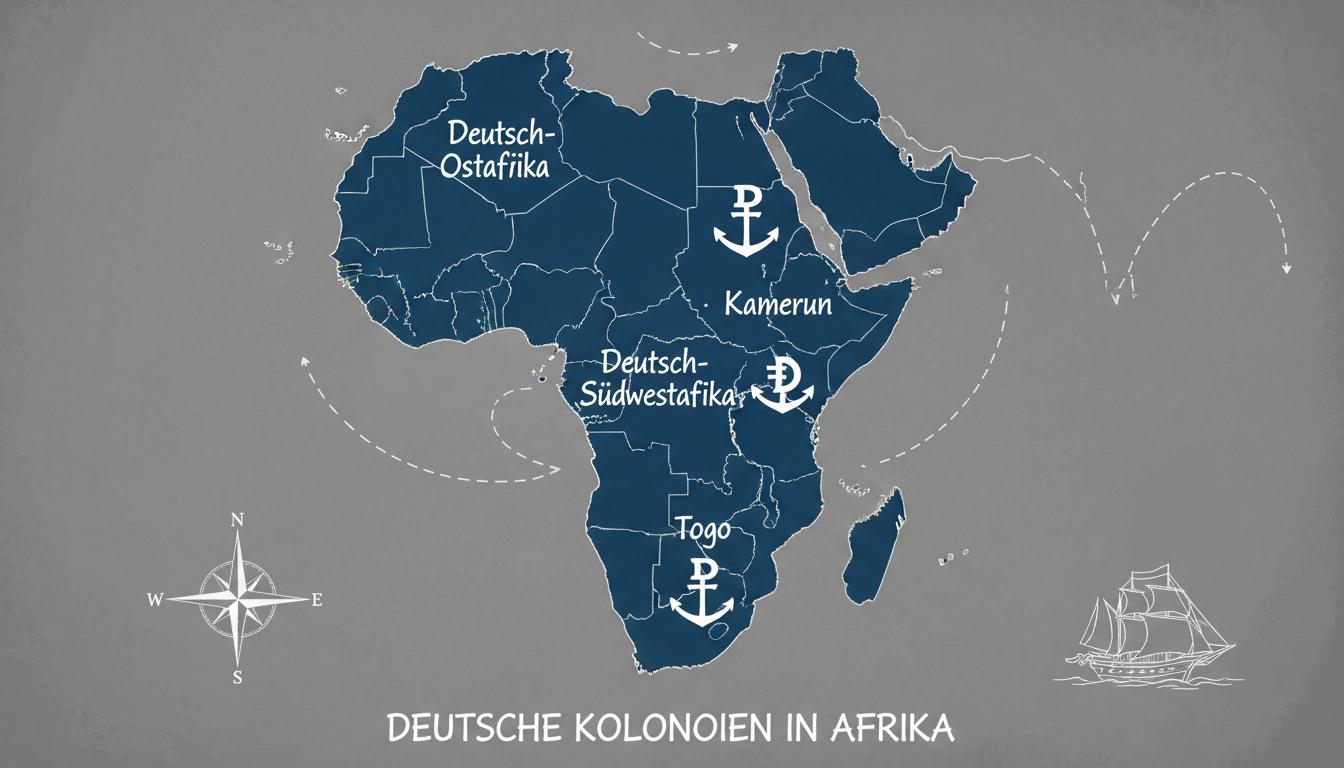
The German Empire’s colonial expansion in the late 19th and early 20th centuries was not just a quest for territory but also a project of economic control. A critical tool in this endeavor was currency, and the german colonies currency history reveals a deliberate strategy to assert dominance, stabilize trade, and integrate new territories into Germany’s economic sphere. From the bustling coastal ports of East Africa to the arid landscapes of South West Africa, Germany implemented distinct monetary policies tailored to local conditions.
These policies ranged from creating entirely new currencies, like the German East African Rupie, to directly imposing the German Mark as the sole legal tender. This approach was designed to phase out competing foreign coins, streamline administration, and project imperial power through the very coins and notes people used daily. Understanding this history offers a unique lens into the mechanics of German colonialism.
The German Mark: A Model for Colonial Monetary Systems
Before Germany could export its monetary system, it first had to create a unified one at home. The establishment of the German Mark (or Goldmark) in 1871 was a pivotal moment, replacing a fragmented system of regional currencies with a single, stable, gold-backed standard. This monetary unity was a cornerstone of the new German Empire’s economic power.
This stable domestic currency provided a reliable foundation for its colonial ambitions. It allowed German administrators to create monetary systems overseas that were either directly linked to or based on the Mark. This foundation of stability was crucial for managing colonial budgets, paying officials, and financing large-scale infrastructure projects. You can learn more about the history of the German Mark and its evolution over time.
The German East Africa Rupie: Taming Monetary Chaos
German East Africa presented a complex monetary environment where the Indian Rupee was the dominant currency for trade. However, its value fluctuated significantly, creating major administrative headaches for German officials whose salaries were fixed in Marks but paid in the variable Rupee, leading to value swings of up to 20% annually.
Early Coinage: The Pesa and the Indian Rupee Problem
The first step towards a unique colonial currency was taken by the German East Africa Company (Deutsch-Ostafrikanische Gesellschaft). Starting in 1890, the company issued its own copper coins called Pesa, minted in Berlin. These coins were pegged to the Indian Rupee, with 64 Pesa equaling one Rupee.
The production of these coins was massive. In 1891 and 1892, over 27.4 million Pesa coins were minted to facilitate local trade and begin the process of displacing other currencies. These early coins, often featuring Arabic script to appeal to local merchants, were a clear sign of Germany’s intent to establish its own economic system.
Government Intervention and the Stabilized German East Africa Rupie
The persistent volatility of the Indian Rupee prompted the German government to take direct control of the colony’s currency in 1904. The solution was to create a new, stable currency: the German East African Rupie. This new Rupie was divided into 100 Heller and, most importantly, was fixed to the German Mark.
The exchange rate was set at 1 German East African Rupie = 1.71 German Marks. This move mirrored the stabilization strategies used by the British and the Sultan of Zanzibar, bringing predictability to the colonial economy. Newly introduced paper notes and coins featured the German imperial eagle alongside local motifs, serving as a powerful symbol of German authority and control. This monetary stability was instrumental in developing infrastructure like railroads by ensuring reliable payments for workers and contractors.
Direct Control: The Mark in German South West Africa Currency
In stark contrast to the tailored approach in East Africa, the german south west africa currency policy was one of direct importation. This colony, now modern-day Namibia, did not receive its own distinct colonial coins. Instead, it primarily used the German Mark, the same currency circulating in the metropole.
Initially, a mix of British and Dutch coins, alongside indigenous forms of exchange, were common. However, German authorities systematically enforced the Mark’s dominance through legal tender laws and administrative decrees. By making the German Mark the only legally accepted currency for taxes and official payments, they effectively forced its circulation and phased out foreign competition, directly tying the colonial economy to that of Germany.
Extending the Mark in African Colonies and the Pacific
Germany’s monetary strategies varied across its global possessions, but the goal of establishing the Mark’s supremacy remained consistent. Each territory presented unique challenges that required different tactics.
Cameroon and Togoland: Phasing Out Foreign Influence
In the West African colonies of Togoland and Cameroon, the Mark in african colonies also became the official functional currency. Due to their location, French and British coins had a strong historical presence. German administrators worked to gradually phase out this foreign competition by distributing German coins and reinforcing the Mark’s legal status, ensuring it became the primary medium of exchange.
Unique Cases in the Pacific and China
Germany’s possessions in the Pacific and its concession in China saw the creation of highly specialized currencies.
- German New Guinea: The currency situation was initially chaotic. To solve this, special New Guinea Mark coins were minted in 1894. Uniquely, these coins were made illegal to export, a clever policy to prevent currency drain from the colony and stabilize the local trade network.
- Kiautschou (China): In its Chinese concession, Germany issued special 5 and 10 cent coins. These coins were bicultural, featuring Chinese characters and local city names alongside German inscriptions. However, they played a minimal role in daily transactions compared to banknotes and silver trade dollars.
Policy and Impact: The Goals of Colonial Currency History Germany
The overarching colonial currency history germany demonstrates a clear and consistent set of policy goals. The primary objective was to replace the patchwork of local and foreign currencies with a unified, German-controlled monetary system. This was achieved through several key strategies:
- Enforcing Legal Tender: Declaring German or German-issued currency as the only legal medium for official transactions.
- Stabilizing Exchange Rates: Pegging colonial currencies like the Rupie to the stable German Mark to eliminate financial risk and uncertainty.
- Symbolic Domination: Using coins and banknotes featuring the German imperial eagle and other state symbols to reinforce political legitimacy and cultural authority, a practice detailed by institutions like the German Historical Museum.
Economic historians note that these currency reforms were central to maximizing the efficiency of resource extraction while minimizing local economic disruptions. It was a pragmatic tool of imperial control as much as a response to administrative needs.
After World War I: The Legacy of German Colonial Money
Germany’s defeat in World War I led to the loss of all its colonies, which were divided among the victorious Allied powers. Consequently, German colonial currencies were officially replaced by those of the new administrators, such as the British pound or French franc. The period following the war was one of immense turmoil for Germany’s domestic currency, leading to the devastating hyperinflation of the Papiermark.
Despite their official replacement, many German colonial coins remained in local circulation for years due to inertia and shortages of new money. Today, these coins are highly valued by historians and numismatists. They serve as tangible artifacts of Germany’s imperial ambitions and provide insight into its overseas economic strategies. Examples of these rare coins can be found in collections worldwide, including at The British Museum.
Frequently Asked Questions
What currency was used in German East Africa and how was it stabilized?
German East Africa initially used copper Pesa coins alongside the Indian Rupee. In 1904, the German government introduced the German East African Rupie, which was stabilized by fixing its value to the German Mark at a rate of 1 Rupie = 1.71 Marks to prevent losses from currency fluctuations.
Did German South West Africa have its own colonial currency?
No, German South West Africa did not have its own distinct colonial currency. It primarily used the German Mark from the metropole, which was enforced as the sole legal tender to displace competing British and Dutch currencies.
What was the purpose of the New Guinea Mark?
The New Guinea Mark was introduced in 1894 to create a stable local currency and, crucially, to prevent the drain of coinage from the colony. An anti-export clause made it illegal to take the currency out of German New Guinea, thereby keeping the money supply stable for local trade.
What happened to German colonial currencies after World War I?
After Germany lost its colonies in WWI, its colonial currencies were replaced by the currencies of the new ruling powers (e.g., Britain and France). However, due to shortages of new money, some German colonial coins continued to circulate locally for a period of time.
Conclusion
The history of currency in Germany’s colonies is a fascinating chapter in both numismatics and imperial history. The German Empire employed sophisticated and varied monetary strategies, from creating the bespoke German East Africa Rupie to enforcing the direct use of the Mark in South West Africa. These policies were powerful tools used to solidify economic control, project authority, and integrate diverse territories into a global German sphere of influence.
These colonial currencies, though short-lived, left behind a legacy that tells a story of ambition, administration, and power. They remain a testament to a time when money was not just a medium of exchange but a symbol of an empire’s reach. Decades later, Germany would build a new economic powerhouse on the strength of the Deutsche Mark, but the lessons from its colonial monetary experiments offer a compelling glimpse into an earlier era of its global economic history.