The Yen and the Bank of Japan’s History of Monetary Policy
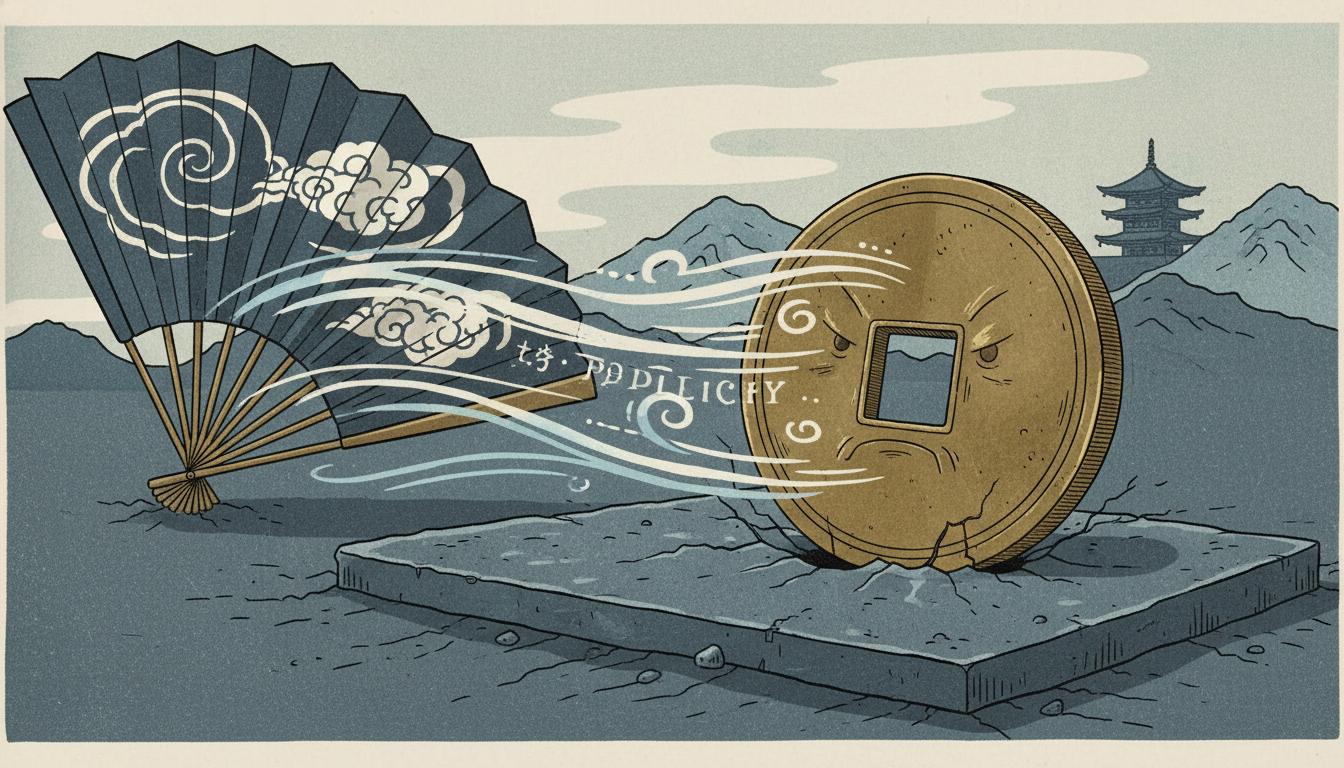
The bank of japan monetary history is a compelling story of innovation, crisis management, and a multi-decade battle against economic forces that have challenged conventional central banking. From post-war boom-and-bust cycles to pioneering unconventional policies that are now staples in the global economic playbook, the Bank of Japan (BOJ) has been at the forefront of monetary experimentation.
Located in Nihonbashi, Tokyo, and often called ‘Nichigin’ (日銀), the BOJ’s journey provides crucial lessons on managing inflation, deflation, and asset bubbles. Its policies have not only shaped the history of the Japanese Yen but have also served as a reference point for central banks worldwide, including the U.S. Federal Reserve and the European Central Bank.
From Nixon Shock to Plaza Accord: Early Boom-Bust Cycles (1971-1985)
The modern era of the Bank of Japan’s monetary policy began with a global shockwave. In August 1971, the “Nixon shock” effectively dismantled the fixed exchange rate system, forcing currencies to float freely. This event set the stage for Japan’s first major post-war inflationary crisis.
The Nixon Shock and Resulting Stagflation
Instead of allowing the yen to appreciate immediately, the BOJ held the fixed rate at 360 yen per U.S. dollar for two weeks. This decision injected excess liquidity into the economy. Even after adopting the new Smithsonian rate of 308 yen/dollar, the bank continued its monetary easing policies until 1973.
The result was severe inflation, which soared to over 10%. To combat this stagflation, the BOJ aggressively raised its official bank rate from 7% to 9%. This decisive action successfully stabilized prices by 1978, demonstrating the bank’s ability to tackle high inflation.
The Energy Crisis and the Plaza Accord
When the second energy crisis hit in 1979, the BOJ acted swiftly, raising the official bank rate again. This proactive stance led to a quick economic recovery, followed by a series of rate cuts between 1980 and 1981.
A pivotal moment in the history of yen intervention occurred with the Plaza Accord of 1985. This agreement among G5 nations was designed to weaken the U.S. dollar. Consequently, the yen appreciated dramatically:
- From 240 yen/dollar before the accord.
- To 200 yen/dollar by the end of 1985.
- To 160 yen/dollar by 1986.
To counteract the deflationary pressures from a rapidly strengthening yen, the BOJ began cutting interest rates aggressively throughout 1986, eventually lowering the rate from 5% to 3.0%.
The Asset Bubble and Its Inevitable Collapse (1986-1991)
The response to the Plaza Accord set the stage for one of the most significant historical currency crises in modern history. The BOJ maintained its official bank rate at a very low 2.5% through May 1989. This extended period of monetary easing, combined with financial deregulation, created a perfect storm for an economic bubble.
Widespread over-valuation of real estate and stocks became rampant as easy credit fueled speculative investment. The BOJ began raising rates belatedly in May 1989, hiking the discount rate five times in just eight months to reach 6% by August 1990. However, it was too late. After 1990, both the stock market and the real estate market collapsed, ushering in decades of economic stagnation.
The Lost Decade and the Dawn of the BOJ Zero Interest Rate Policy History (1991-2000)
The bursting of the asset bubble in 1991 triggered a prolonged period of deflation that would define Japan’s economy for decades. In response, the BOJ embarked on a new path of aggressive monetary easing. Between 1991 and 1995, the bank implemented a series of interest rate cuts, reducing the discount rate to a then-historic low of 0.5% in September 1995.
When these measures proved insufficient, the BOJ took a radical step. In February 1999, it introduced the Zero Interest Rate Policy (ZIRP), setting short-term rates to virtually zero. The bank made an explicit promise to maintain this policy “until deflationary concern is dispelled.”
Despite government opposition, the policy was prematurely terminated in August 2000 amid concerns about an emerging IT bubble. This rate increase proved to be a misstep, as the economy soon faltered again, forcing the BOJ to reconsider its strategy.
Pioneering a New Era: The History of QE in Japan (2001-2006)
By 2001, Japan’s economy was struggling again, prompting the BOJ to innovate once more. On March 19, 2001, the bank announced a groundbreaking shift in its policy framework, a moment that represents a milestone in central banking history. It initiated the world’s first Quantitative Easing (QE) policy.
Instead of targeting short-term interest rates, the BOJ’s new operating target became the outstanding balance of current accounts held at the central bank. Under QE, the BOJ committed to:
- Steadily increasing the target for current account balances.
- Expanding the range of assets it would purchase.
This policy, which aimed to manage the money supply directly, remained in effect until March 2006. The period also saw massive government-led yen exchange rate management, with large-scale intervention operations from 2003 to 2004 that helped support the economic recovery. In June 2006, the BOJ finally ended the zero-interest-rate policy, raising rates to 0.25%.
Modern Unconventional Policy: Crisis Response and Abenomics
The BOJ’s experience with unconventional tools positioned it to respond to subsequent global shocks. Its policy evolution continued through the 2008 financial crisis and the subsequent era of “Abenomics.”
Responding to the 2008 Global Financial Crisis
During the 2008 financial crisis, the BOJ leveraged its balance sheet once again. It cut the uncollateralized call rate to 0.1% by December 2008. More importantly, it expanded its asset purchases to include Japanese Government Bonds (JGBs), commercial paper, and corporate bonds to ensure market stability.
Abenomics and Aggressive Easing (2012 onwards)
Following the election of Prime Minister Shinzō Abe in December 2012, the fight against deflation intensified. Under new Governor Haruhiko Kuroda, the BOJ launched Quantitative and Qualitative Monetary Easing (QQME) in April 2013. This aggressive program had two primary goals:
- Achieve a 2% inflation target.
- Double Japan’s monetary base in two years by purchasing 60-70 trillion yen of securities and bonds annually.
However, by 2016, it was clear that even this massive stimulus had failed to dislodge entrenched deflation. This led to another policy review and further innovation.
Introducing YCC, NIRP, and a Historic Shift
In 2016, the BOJ introduced two more novel policies:
- Yield Curve Control (YCC): A policy to control both short-term and long-term interest rates by targeting the yield on 10-year JGBs.
- Negative Interest Rate Policy (NIRP): Charging commercial banks for holding certain reserves, a policy designed to encourage lending.
During this period, the BOJ also became the largest single owner of Japanese stocks through its purchases of exchange-traded funds (ETFs). This unprecedented era finally came to a close in 2024. After Japan’s largest companies announced significant wage growth of around 5%, the BOJ ended eight years of negative interest rates, setting a new short-term target of 0 to 0.1%.
A Global Blueprint: The BOJ’s Influence on Central Banking
The bank of japan monetary history is not just a national story; it’s a global one. The policies it pioneered out of necessity became a blueprint for other major central banks following the 2008 financial crisis. For more on this, you can read the Bank of Japan’s own review of its monetary policy.
The BOJ’s shift from interest rate targeting to managing its balance sheet in 2001 was a watershed moment. Its willingness to purchase a diverse range of assets—including corporate bonds, ETFs, and even Japanese Real Estate Investment Trusts (J-REITs)—expanded the toolkit for central bankers everywhere. As noted by institutions like the Peterson Institute for International Economics, Japan’s experience provided invaluable, if sometimes cautionary, lessons for the world.
Frequently Asked Questions
What was the Zero Interest Rate Policy (ZIRP)?
The Zero Interest Rate Policy (ZIRP) was a policy introduced by the Bank of Japan in February 1999 to combat deflation. It involved setting short-term interest rates to virtually zero to encourage borrowing and spending. The BOJ committed to keeping rates at zero “until deflationary concern is dispelled,” marking a significant step toward unconventional monetary policy.
How did the 1985 Plaza Accord affect Japan’s monetary policy?
The Plaza Accord caused the Japanese yen to appreciate dramatically against the U.S. dollar, rising from 240 to 160 yen/dollar between 1985 and 1986. To offset the deflationary impact of a stronger yen, the BOJ aggressively cut interest rates. This prolonged period of low rates ultimately fueled the Japanese asset bubble of the late 1980s.
What is Quantitative Easing (QE) and why was it a milestone?
Quantitative Easing, pioneered by the BOJ in March 2001, was a monetary policy that shifted the focus from targeting interest rates to targeting the quantity of money in the financial system. The BOJ began purchasing assets to increase the balance of current accounts held by commercial banks. It was a milestone because it was the first time a major central bank used its balance sheet as its primary policy tool, a practice later adopted by the U.S. Federal Reserve and others.
What was the goal of “Abenomics”?
Abenomics, the economic strategy of Prime Minister Shinzō Abe, aimed to pull Japan out of its decades-long deflationary slump. Its monetary policy component, led by BOJ Governor Haruhiko Kuroda, involved massive Quantitative and Qualitative Easing (QQME). The primary goal was to achieve a stable 2% inflation target by doubling the country’s monetary base and radically shifting inflation expectations.
Conclusion: A Legacy of Innovation
The Bank of Japan’s monetary history is a testament to its resilience and willingness to experiment in the face of unprecedented economic challenges. From battling post-war inflation to pioneering ZIRP, QE, and YCC to fight deflation, the BOJ has consistently pushed the boundaries of central banking. While its battle against deflation was long and arduous, its policies provided a critical playbook for the rest of the world.
As Japan enters a new era of positive interest rates in 2024, the lessons learned over the past five decades remain profoundly relevant. Understanding this journey is essential for grasping not only the dynamics of the Japanese yen but also the evolution of modern global finance, including events like the Asian Financial Crisis of 1997 and beyond.