The History of US Dollar Design: Figures, Symbols, and Security Features
The United States dollar is one of the most recognized currencies in the world, but its familiar design is the result of a long and fascinating evolution. More than just a medium of exchange, each bill tells a story of the nation’s history, values, and technological progress. The us dollar design history is a journey from ornate, artistic notes to the standardized, security-focused bills we use today.
This history reflects a constant balance between aesthetics, practicality, and the ever-present need to stay ahead of counterfeiters. From the portraits of iconic leaders to the hidden security threads, every element has a purpose. Understanding this evolution reveals how the U.S. government has sought to instill confidence and project stability through its currency for over 150 years.
The Genesis of American Currency: From Colonial Notes to Federal Dollars
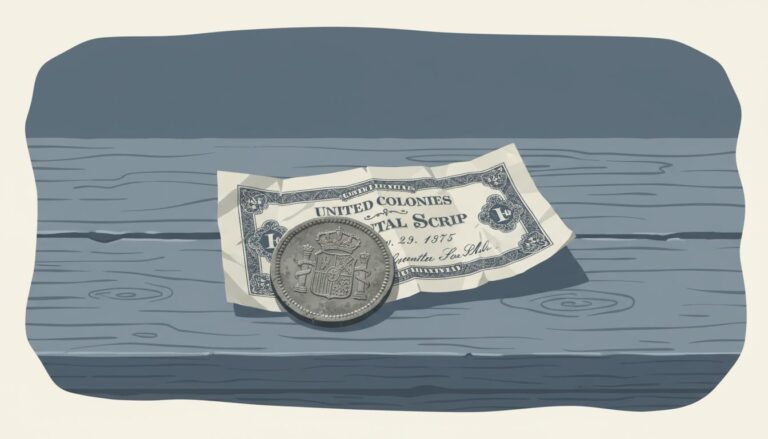
While the federal government first issued a $1 bill in 1862, paper money was not a new concept in America. Colonial notes were circulated in the 18th century to facilitate trade. However, the foundation for a national currency was laid with the Coinage Act of 1792, which established the dollar as the official unit of money, pegged to the value of the widely used Spanish silver dollar.
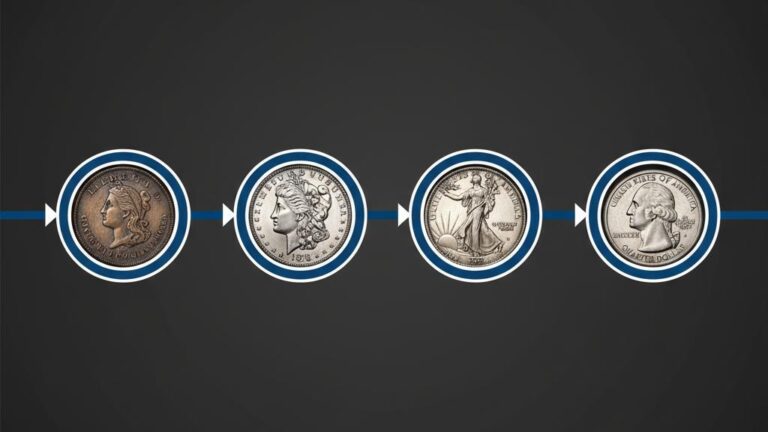
This act was a monumental step in defining the nation’s financial identity, setting the stage for both coinage and paper currency. The development of coins like the half-cent played a crucial role in early American commerce, which you can learn more about in the history of US coinage.
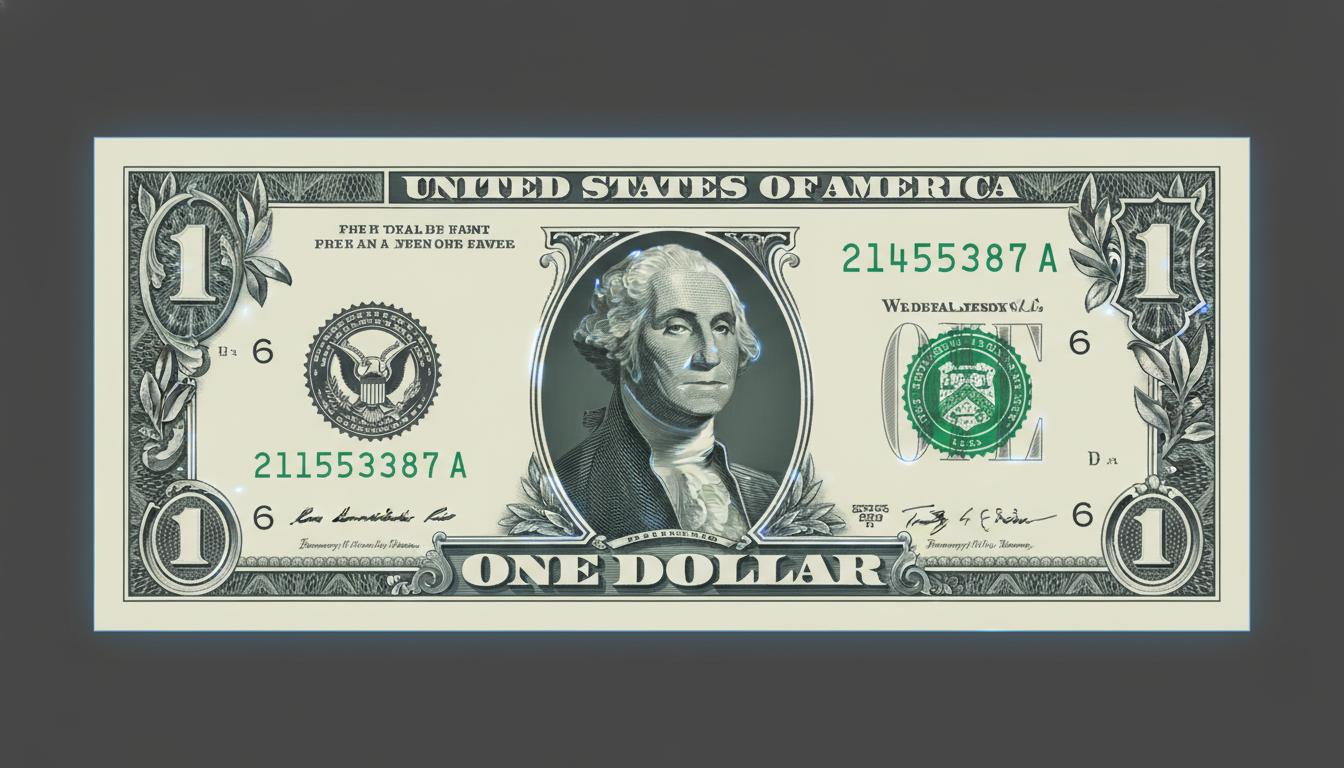
The first federally issued one-dollar note appeared in 1862 during the Civil War. It featured a portrait of Salmon P. Chase, the Secretary of the Treasury at the time. The iconic image of George Washington, now synonymous with the dollar, did not appear on the bill until 1869.
A Century of Transformation: Major US Currency Design Changes
The look and feel of American money have undergone several radical transformations, driven by artistic trends, production costs, and security concerns. The most significant shifts occurred in the late 19th and early 20th centuries and again with the move toward standardization.
The Era of Ornate Engravings (Late 19th – Early 20th Century)
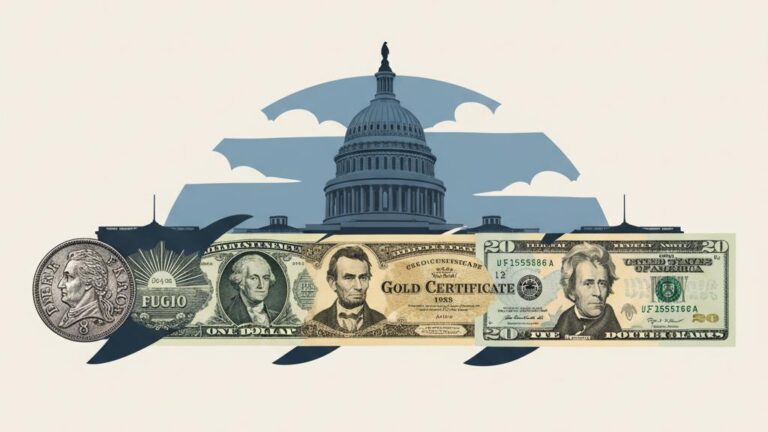
Early U.S. banknotes were often larger and more artistically elaborate than modern bills. These notes featured complex engravings, allegorical figures representing concepts like liberty and justice, and portraits of notable Americans. This period produced some of the most beautiful currency in the nation’s history.
A standout example is the 1886 $1 Silver Certificate, which featured a portrait of Martha Washington. To this day, she remains the only woman ever depicted on a U.S. paper currency note. This series of notes, backed by the government’s silver deposits, represents a unique period in American finance detailed in the Silver Certificate Era.
The 1929 Standardization: Smaller Bills for a Modern Age
In 1929, U.S. currency underwent its most dramatic physical change. All banknotes were redesigned and standardized to their current size of 6.14 by 2.61 inches. This “small-size” format was introduced for two key reasons:
- Reduced Production Costs: Smaller notes required less paper and ink, making them cheaper to produce.
- Ease of Handling: The uniform size made bills easier for the public and financial institutions to handle and store.
The new designs also featured a green treasury seal and more streamlined imagery, intended to signal official status and enhance security.
The Modern Era: Symbols and Mottos
Even after the 1929 standardization, the designs continued to evolve. In 1935, the reverse (back) of the $1 bill was updated to include both sides of the Great Seal of the United States—the familiar pyramid and eagle. The current obverse (front) design of the $1 bill was finalized, with minor tweaks, in 1963.
Another significant addition came in 1957, when the motto “In God We Trust” was added to all paper currency. This change reflected the cultural and political climate of the era.
Who’s Who on the Dollar: The Portraits on Key Denominations
The portraits on U.S. currency are among its most recognizable features. The selection of these figures was intended to honor individuals who played a pivotal role in the nation’s history. This consistency also serves as a quick, informal security check for the public.
George Washington on the $1 Bill
George Washington has been the face of the $1 bill since 1869. His enduring presence provides a sense of stability and familiarity. According to security experts, this consistency helps ordinary people spot fakes, as any deviation from the well-known portrait is more easily noticed.
Who is on the $100 bill? Benjamin Franklin
The $100 bill features the portrait of Benjamin Franklin, one of the nation’s most influential Founding Fathers. His image was first placed on the denomination in 1914 following the passage of the Federal Reserve Act. Franklin, known for his contributions as a statesman, inventor, and diplomat, has remained the face of the C-note ever since.
Securing the Currency: The Evolving History of Dollar Security Features
From the very beginning, a core focus of the us dollar design history has been the fight against counterfeiting. As printing technology has advanced, so too have the security measures embedded in banknotes.
Early anti-counterfeiting methods relied on intricate, difficult-to-replicate engravings and colored seals. The problem was so severe that the U.S. Secret Service was established in 1865 with the primary mission of combating counterfeit currency. You can learn more about its origins on the official Secret Service website.
Since the 1990s, the U.S. has introduced a wave of advanced security features on all denominations of $5 and higher, including:
- Security Threads: A polymer thread embedded vertically in the paper that glows under UV light.
- Color-Shifting Ink: Ink that appears to change color when the note is tilted.
- Watermarks: A faint image visible when the bill is held up to the light.
- Microprinting: Extremely small text that is difficult to reproduce with standard printers.
The $1 and $2 bills have not received these upgrades primarily due to their low value and lower risk of being counterfeited. The security and recognizability of the dollar are crucial to its role in the global economy, helping maintain its status as the world’s primary reserve currency.
Why is US Money Green?
The iconic green color of U.S. currency was not an arbitrary choice. When the government began issuing small-size notes in the 1920s, green ink was chosen for several practical and symbolic reasons.
First, green ink was known for its high resistance to chemical and physical changes, making it durable and difficult to fade. Second, at the time, green pigment was readily available in large quantities. Symbolically, the color green became associated with the stability and trustworthiness of the U.S. government, a message further explored by the U.S. Currency Education Program.
Frequently Asked Questions
Who is on the $100 bill?
Benjamin Franklin, a Founding Father and inventor, has been featured on the $100 bill since 1914.
What major design changes have US dollar bills undergone?
US bills were reduced in size and standardized in 1929. More recent changes since the 1990s have focused on adding advanced security features like security threads and color-shifting ink to denominations of $5 and above.
Why has the design of the $1 bill remained almost unchanged?
The $1 bill’s design is stable because it is infrequently counterfeited, and implementing design changes is costly. Anti-counterfeiting efforts are prioritized for higher-value denominations.
Why is US currency green?
Green ink was chosen for its durability, resistance to chemical change, and its availability. Over time, it came to symbolize the currency’s stability and legitimacy.
When was ‘In God We Trust’ added to US currency?
The motto “In God We Trust” was first added to U.S. paper currency in 1957, reflecting a period of increased national religious sentiment.
Conclusion
The design history of the U.S. dollar is a mirror reflecting the nation’s journey. It has transformed from the artistic flourishes of the 19th century to the practical, security-laden notes of the 21st century. Each change, whether the addition of a portrait, a shift in size, or the embedding of a security thread, tells a story of a country adapting to new challenges while holding onto its foundational symbols.
Today, the greenback is more than just money; it is a global emblem of American culture and economic strength. Its familiar figures and symbols continue to provide a sense of stability in an ever-changing world.