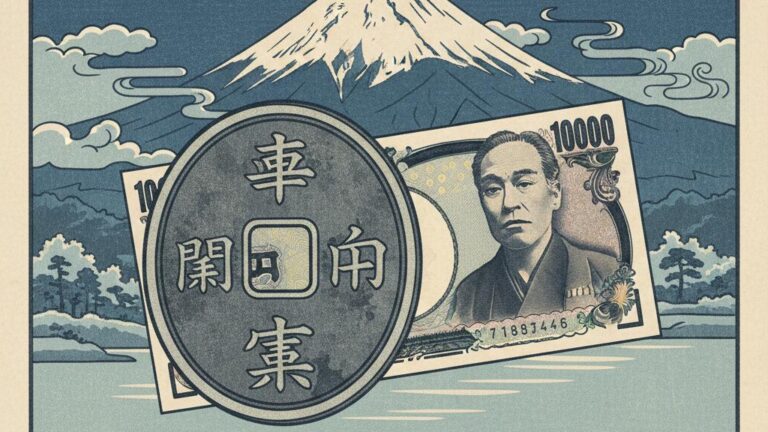
The History of Japanese Banknotes: Art, Figures, and Security
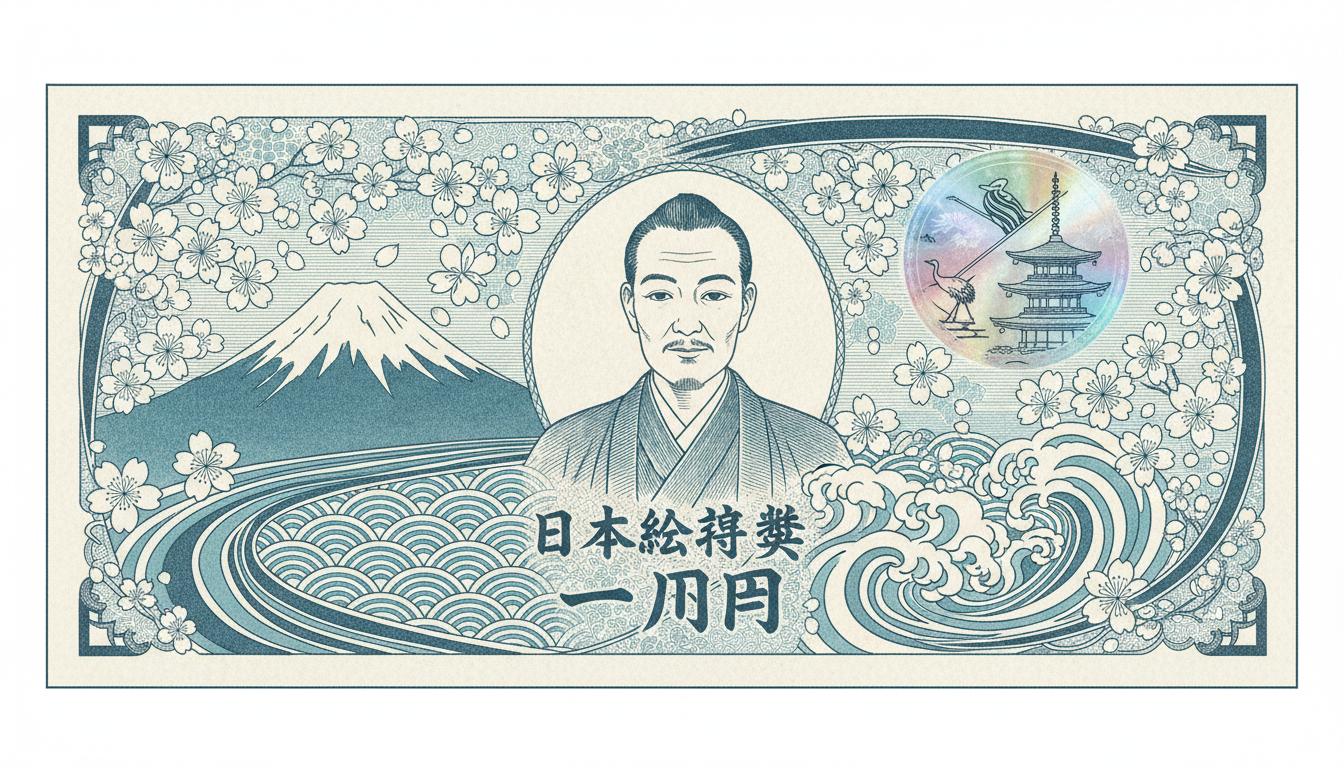
Japanese banknotes are far more than simple tools for commerce; they are intricate canvases that tell the story of a nation’s journey. Each note is a carefully curated piece of art, showcasing cultural icons, pioneering figures, and some of the world’s most advanced security technology.
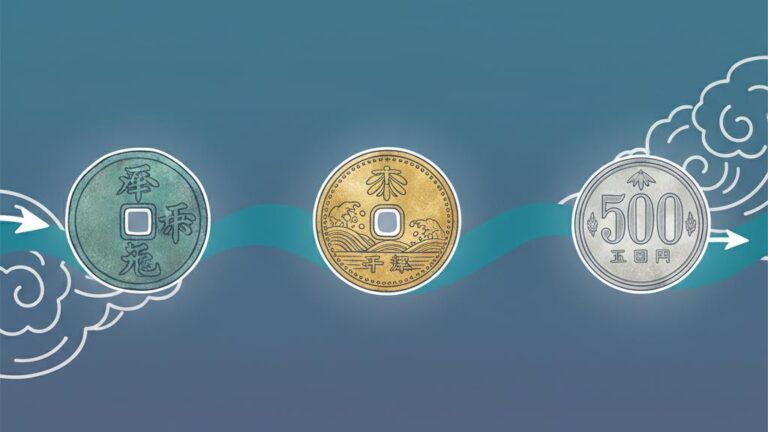
This deep dive into Japanese banknotes history reveals a fascinating transition from feudal commodity money to a unified, modern currency. We will explore the iconic designs, the celebrated individuals who grace the yen, and the relentless innovation that keeps it secure, reflecting Japan’s unique blend of tradition and forward-thinking progress.
From Commodity to Currency: The Dawn of the Yen
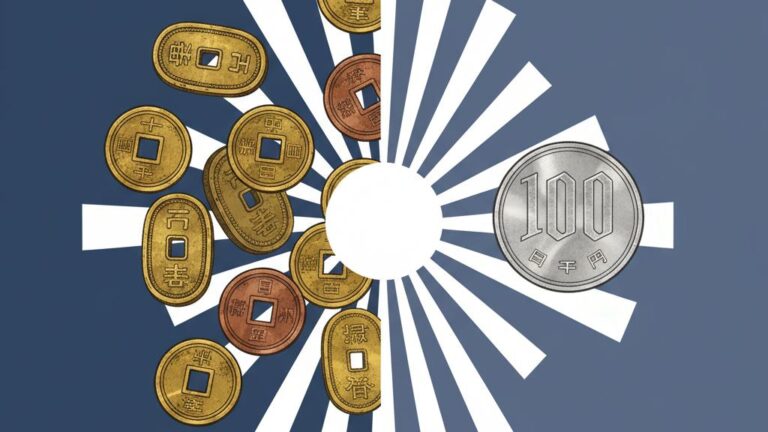
Before a unified currency, Japan’s economy operated on a complex patchwork of regional currencies and commodity money. Valuables like rice, gold, and silver served as the primary means of exchange, a system that reflected the fragmented nature of feudal Japan. The entire monetary landscape has a rich backstory, starting long before paper notes with the first history of Japanese coinage.
The turning point came with the Meiji Restoration, a period of profound modernization. As part of this nationwide effort, the government established the yen (¥) with the New Currency Act of 1871. This act was monumental, replacing the old system and introducing decimalization, dividing the yen into 100 sen and 1,000 rin. This was a critical step in the Meiji Restoration’s birth of the yen, paving the way for a modern economic identity.
The First Paper Money: Meiji Tsuho Notes
With the yen established, the need for standardized paper money was immediate. The first paper banknotes were issued in 1872, known as Meiji Tsuho notes. These early notes were produced in denominations ranging from 1 to 100 yen, along with smaller subsidiary notes.
A key figure in this early stage was the Italian engraver Edoardo Chiossone. His expertise was crucial in designing these first notes, lending a European artistic and technical flair to Japan’s new currency. This marked the beginning of the official history of paper money in Japan, moving the nation definitively away from commodity-based transactions.
Centralizing Control: The Bank of Japan
In the early years of the yen, monetary control was still decentralized. Various regional and national banks, alongside the Ministry of Finance, issued their own yen-denominated notes, creating complexity and inconsistency. To stabilize the economy and unify the currency, the Bank of Japan (BOJ) was founded in 1882.
The establishment of the BOJ was a landmark event. It was granted the exclusive authority to issue banknotes, a monopoly it holds to this day. This centralization phased out the notes from private banks and solidified the government’s control over its monetary system. Since 1877, all domestic banknotes have been produced by Japan’s National Printing Bureau, which continues to be responsible for their creation.
A Gallery of Geniuses: The Figures on Japanese Yen Notes
One of the most compelling aspects of the Japanese banknotes history is the selection of figures honored on the currency. Unlike countries that feature political leaders or monarchs, Japan traditionally celebrates pioneers in science, literature, education, and industry, reflecting a deep cultural respect for societal contribution.
The Current Series F (Issued July 2024)
Approximately every 20 years, Japan redesigns its banknotes to incorporate new technology and reflect evolving cultural values. The latest redesign, Series F, was introduced in July 2024 and features a new trio of influential figures:
- ¥1,000 Note: Features Shibasaburō Kitasato, a pioneering bacteriologist who made significant contributions to public health. The reverse side depicts the iconic woodblock print “The Great Wave off Kanagawa” by Hokusai.
- ¥5,000 Note: Honors Umeko Tsuda, a trailblazer in women’s education in Japan and the founder of Tsuda University. The back of the note is adorned with beautiful wisteria flowers.
- ¥10,000 Note: Depicts Eiichi Shibusawa, often called the “father of Japanese capitalism,” for his role in establishing hundreds of modern corporations and economic institutions. The reverse shows the historic Tokyo Station building.
Notable Figures from Past Series
Prior to the 2024 series, other luminaries graced the yen. For many years, the ¥1,000 note featured bacteriologist Hideyo Noguchi, while earlier versions honored novelist Natsume Sōseki. These selections underscore Japan’s long-standing tradition of commemorating figures who advanced science and culture.
The Curious Case of the ¥2,000 Note
An outlier in the modern lineup is the ¥2,000 note. First issued in 2000 to commemorate the G8 summit held in Okinawa, it is the only current note that does not feature a portrait. Instead, its obverse depicts the Shureimon gate, a famous landmark in Naha, Okinawa.
Despite being legal tender, the ¥2,000 note is rarely seen in circulation today. Many vending machines and ATMs were never updated to accept it, making it more of a collector’s item than a practical piece of currency.
Guarding the Currency: The Evolution of Yen Security Features History
Japanese banknotes are renowned worldwide for being incredibly difficult to counterfeit. This reputation is built on a long history of integrating cutting-edge security technology, a process that continues with each new series.
From Intricate Patterns to Advanced Tech
The commitment to security in japanese banknote design began with early methods like intricate geometric patterns and highly detailed watermarks, which are still in use today. As printing technology evolved, so did the anti-forgery measures. Modern Japanese banknotes are packed with sophisticated security features, which you can explore on the official Bank of Japan website.
Key modern yen security features history includes:
- Holograms: The 2024 series introduced state-of-the-art 3D holograms where the portrait appears to turn and move as the note is tilted.
- Watermarks: Extremely detailed watermarks of the featured portrait are embedded in the paper.
- Microprinting: Tiny letters spelling out “NIPPON GINKO” (Bank of Japan) are printed in various locations, invisible to the naked eye.
- Color-Shifting Ink: The denomination number on the note changes color depending on the viewing angle.
- Tactile Marks: To aid the visually impaired, different denominations have unique raised marks, a feature that was enhanced in the 2024 redesign for better recognition.
The 2024 notes also feature larger denomination numbers and universal design principles to improve accessibility for everyone.
Frequently Asked Questions
When were Japanese yen banknotes first issued?
The first yen-denominated paper money was issued in 1872 with Meiji Tsuho notes, shortly after the yen was introduced as the official currency in 1871.
Who is currently depicted on Japanese yen banknotes?
As of 2024, Shibasaburō Kitasato appears on the ¥1,000 note, Umeko Tsuda on the ¥5,000 note, and Eiichi Shibusawa on the ¥10,000 note. The rarely circulated ¥2,000 note features Shureimon gate.
What security features are used in modern Japanese banknotes?
Current Japanese banknotes include advanced security features such as 3D holograms, intricate watermarks, microprinting, color-shifting inks, and tactile marks for the visually impaired.
How often are Japanese banknotes redesigned?
Japanese banknotes are typically redesigned roughly every 20 years to include new security technologies and to reflect contemporary cultural and technological advancements.
Which institution is responsible for issuing Japanese banknotes?
The Bank of Japan is the sole authority responsible for issuing all Japanese banknotes since its establishment in 1882.
Conclusion: A Currency of Culture and Innovation
The history of Japanese banknotes is a mirror reflecting the nation’s own story of transformation. From the fragmented monetary system of the feudal era to today’s technologically superior and culturally rich currency, the yen has been a constant symbol of Japan’s progress and identity.
Each note is a testament to the nation’s dedication to honoring its past innovators while relentlessly pushing the boundaries of technology and security. They are not just currency but artifacts of national pride, reflecting a long journey in the history of the Japanese yen from the Edo period to its global role today.