The First Day of the Euro: The Cash Changeover in 2002
On January 1, 2002, an unprecedented monetary event unfolded across Europe. Over 300 million people woke up to a new currency in their pockets, as twelve nations simultaneously replaced their historic banknotes and coins with the euro. This massive logistical operation, known as the euro cash changeover 2002, was the culmination of years of planning and marked the moment the euro became a tangible reality for the general public.
Often called “day one of the euro,” this transition was far more than just printing new money. It was one of the most complex currency changeovers in history, requiring immense coordination between governments, central banks, commercial businesses, and citizens. While the creation of the euro as a concept began years earlier, 2002 was the year it physically entered daily life, fundamentally reshaping Europe’s economic landscape.
The Road to “E-Day”: Years of Meticulous Preparation
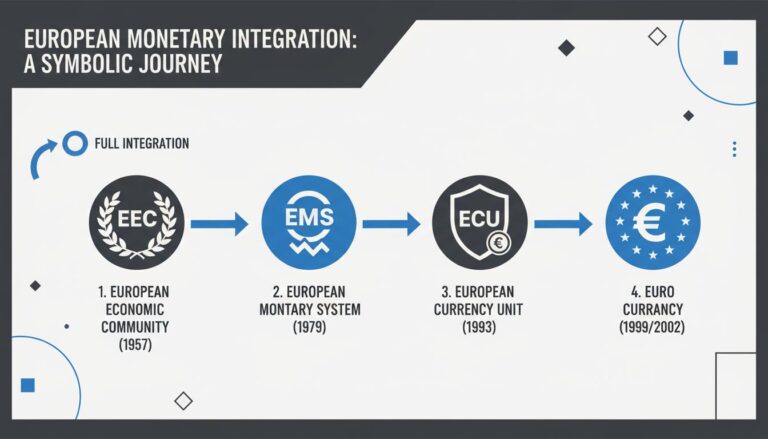
The journey to the physical euro began long before 2002. On January 1, 1999, the euro was officially established as an accounting currency for electronic payments and financial markets. For three years, it existed as a “virtual” currency, but the ultimate goal was to put physical notes and coins into circulation.
This required a production and distribution effort on a scale never seen before.
A Monumental Production Task
The task of creating enough cash for twelve countries was staggering. Production of euro banknotes began as early as July 1999, overseen by the European Central Bank (ECB) and the national central banks of the participating nations. The sheer numbers illustrate the scale of the operation:
- Banknotes Produced: Nearly 14.89 billion banknotes with a total value of €633 billion were ready for the launch.
- Coins Produced: Approximately 52 billion coins, totaling €15.75 billion, were minted.
This enormous volume of new currency had to be produced securely and distributed across the entire eurozone in complete secrecy to prevent theft and maintain financial stability.
Frontloading: Distributing the Cash Before Day One
To ensure a smooth transition, it was critical that the new currency was widely available from the very first moment. This was achieved through a process called “frontloading,” which began in September 2001. During this phase, banks and major retailers received large quantities of euro notes and coins in advance under strict security measures.
This pre-positioning of cash ensured that bank branches and, most importantly, ATMs would be stocked and ready. The logistics involved seamless cooperation among central banks, commercial banks, cash-in-transit companies, and the retail sector, all working towards a single goal: a flawless launch on January 1.
Day One of the Euro: The “Big Bang” on January 1, 2002
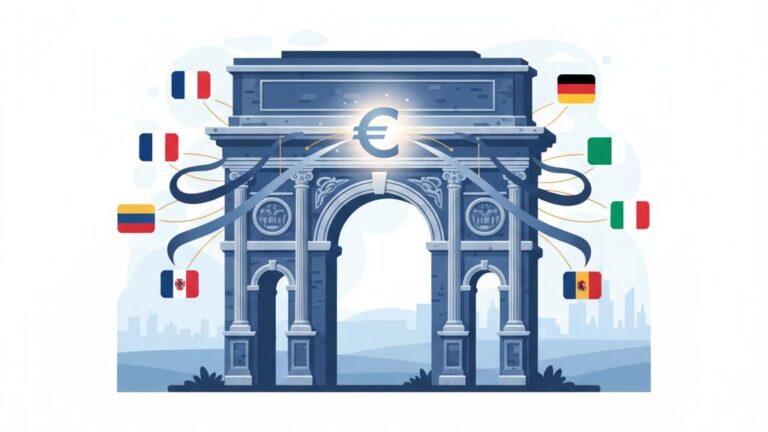
When the clock struck midnight, the euro cash changeover 2002 officially began. The world’s largest monetary transition at the time became a reality for approximately 302 million people in the following twelve countries:
- Austria
- Belgium
- Finland
- France
- Germany
- Greece
- Ireland
- Italy
- Luxembourg
- The Netherlands
- Portugal
- Spain
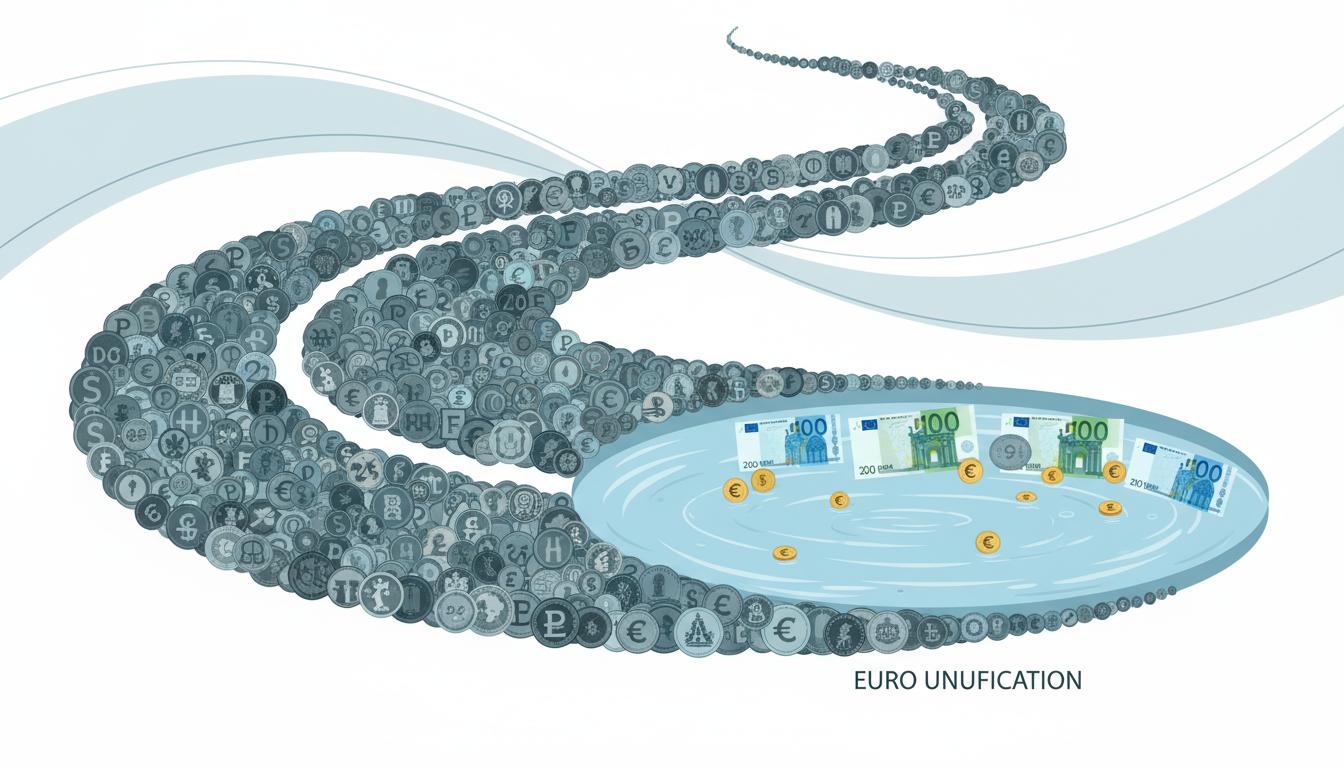
This event marked the final step in replacing iconic national currencies like the German Deutsche Mark, the French Franc, and the Italian Lira with a single, unified currency.
The Public’s First Encounter with the Euro
For most citizens, the first interaction with the new currency came from an ATM. Thanks to the extensive frontloading efforts, the conversion of the eurozone’s vast ATM network was remarkably fast. By January 3, 2002, a staggering 96-97% of all ATMs in the euro area were dispensing euro banknotes.
To help the public familiarize themselves with the new money, authorities launched extensive information campaigns. A key part of this strategy was the sale of “starter kits.” These small packages contained a mix of euro coins, allowing people to see and feel the currency before it became legal tender. The initiative was a huge success, with 150 million starter kits sold in just two weeks.
The Dual Circulation Period and National Currency Withdrawal
To avoid economic paralysis, the old national currencies were not invalidated overnight. Instead, a “dual circulation” period was established, during which both the euro and the legacy currencies were accepted as legal tender. This gave consumers and businesses time to adapt and exchange their old cash.
This period varied by country but was designed to be short to encourage a swift transition. By March 1, 2002, just two months after its introduction, the euro became the sole legal tender across the twelve participating nations.
Phasing Out Historic Currencies
The introduction of euro notes and coins was only half the battle; the other half was the monumental task of national currency withdrawal. Central banks orchestrated the removal of billions of old notes and coins from the financial system. In total, more than 6 billion legacy banknotes and nearly 30 billion national coins were taken out of circulation.
Some countries completed the changeover faster than others. The Netherlands was particularly efficient, retiring the Dutch guilder and completing its transition by January 28, 2002, making it the first country to do so.
What Happened to the Legacy Currencies?
Even after the dual circulation period ended, citizens holding old currencies were not left empty-handed. National central banks continued to exchange legacy banknotes for euros. The exchange period varied significantly by country, with some offering a limited window and others providing an indefinite service.
For example, central banks in Germany, Ireland, Austria, and Spain committed to exchanging their former banknotes indefinitely, ensuring that old savings, like those held in the powerful Deutsche Mark, would not lose their value. You can find more details about this historical commitment on official sites like the German Bundesbank.
The Lasting Legacy of the Euro Cash Changeover 2002
The 2002 changeover is widely regarded as a remarkable operational success. The meticulous planning, multi-sector collaboration, and effective public communication ensured the transition was overwhelmingly smooth with minimal disruption. It was a massive technical, logistical, and social achievement that demonstrated the power of coordinated European action.
This successful launch provided a solid foundation for the euro’s role as a major global currency and created a blueprint for future countries joining the eurozone. The event remains a key milestone in the practical history of the euro launch, transforming a political and economic project into a daily reality for millions. For a detailed overview, the European Central Bank provides an official retrospective on this historic event.
Frequently Asked Questions
What was the euro cash changeover in 2002?
The euro cash changeover in 2002 was the process where twelve European Union member states replaced their individual national currencies with physical euro banknotes and coins, making the euro their sole legal tender for everyday transactions.
Which countries adopted the euro in cash form on January 1, 2002?
Austria, Belgium, Finland, France, Germany, Greece, Ireland, Italy, Luxembourg, the Netherlands, Portugal, and Spain were the twelve countries that introduced euro cash on January 1, 2002.
How long did both euros and national currencies circulate together?
A “dual circulation” period, where both euros and old national currencies were accepted, lasted for up to two months. By March 1, 2002, the euro became the sole legal tender in the original twelve eurozone countries.
How many banknotes and coins were produced for the euro launch?
For the 2002 launch, approximately 14.89 billion euro banknotes and about 52 billion euro coins were produced and distributed across the twelve participating countries.
What happened to old national currency notes after the euro changeover?
After they were no longer legal tender, old national banknotes and coins were withdrawn from circulation. However, citizens could exchange them for euros at their respective national central banks, with some countries like Germany and Austria offering an indefinite exchange period.
Conclusion
The euro cash changeover 2002 was a defining moment in modern economic history. It represented the tangible birth of a currency that now serves hundreds of millions of people. The success of this complex operation was a testament to years of careful planning and cross-border cooperation, turning the abstract idea of a single European currency into the money people used for their morning coffee, daily groceries, and long-term savings.
This historic event not only simplified travel and trade but also solidified a new era of European integration. It remains a cornerstone in the broader story of the history and impact of the euro’s creation, demonstrating how a monumental idea can be transformed into a practical, everyday reality.