The Failure of the European Exchange Rate Mechanism (ERM)
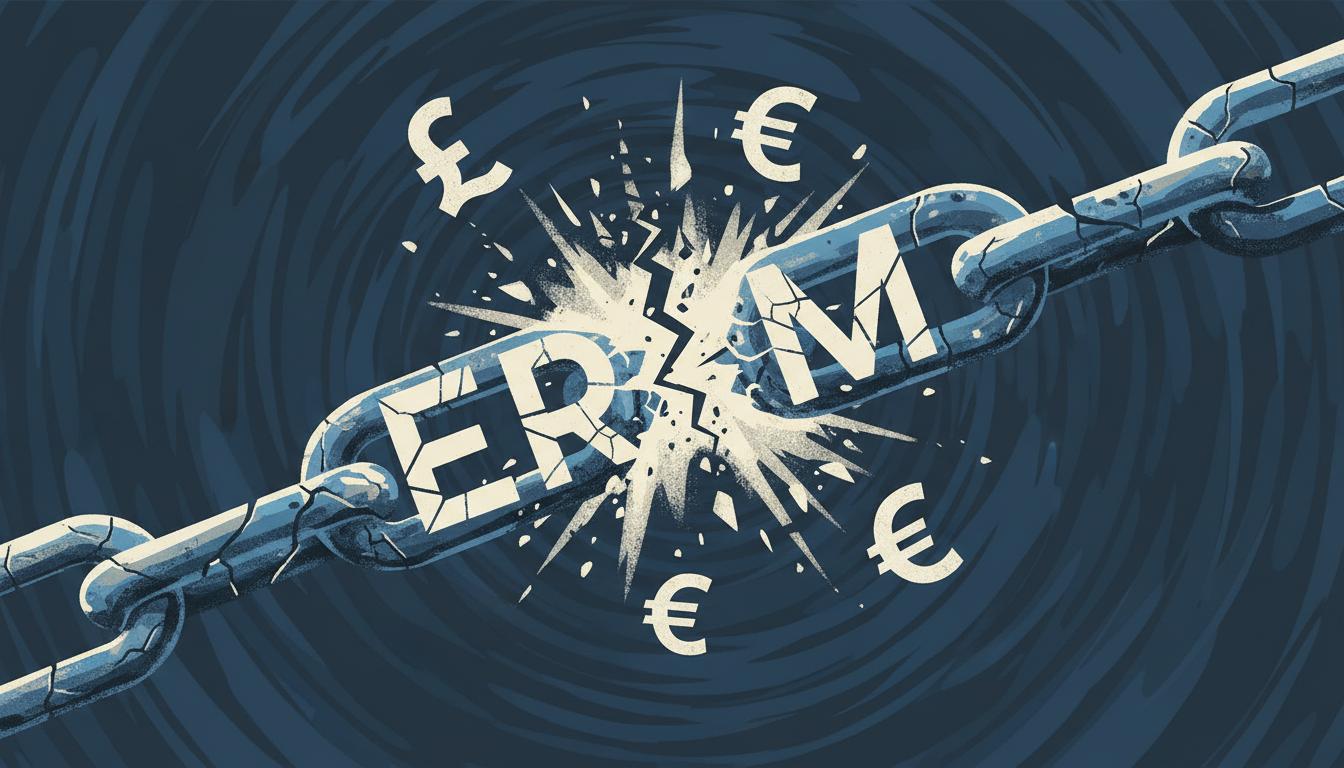
The early 1990s witnessed a seismic shock to European monetary stability, a period defined by the dramatic european exchange rate mechanism failure. This crisis, which peaked on a day famously known as “Black Wednesday,” not only dismantled a system designed to unify Europe’s currencies but also reshaped the continent’s path toward a single currency. It stands as a powerful case study in the inherent vulnerabilities of fixed exchange rate systems in a world of globalized finance.
Established in 1979, the European Exchange Rate Mechanism (ERM) was an ambitious agreement to limit currency fluctuations among European Community members. By pegging currencies to the strong German Deutsche Mark within narrow bands, the ERM aimed to foster stable trade and economic convergence. However, a perfect storm of divergent economic policies, political uncertainty, and powerful market speculation would ultimately prove this arrangement to be fundamentally unstable.
What Was the European Exchange Rate Mechanism (ERM)?
The European Exchange Rate Mechanism was the cornerstone of the European Monetary System (EMS), launched in 1979. Its primary objective was to create a zone of monetary stability in Europe, reduce exchange rate volatility, and prepare member countries for an eventual monetary union.
The system worked by establishing a central exchange rate for each currency against a basket of currencies, with the German Deutsche Mark serving as the de facto anchor due to Germany’s economic strength and commitment to low inflation.
How the ERM Functioned
- Central Rates and Fluctuation Bands: Each currency had a central rate against other member currencies. It was allowed to fluctuate within a narrow band, typically ±2.25% around this central rate.
- Central Bank Intervention: If a currency’s value approached the upper or lower limit of its band, the respective central bank was obligated to intervene. This involved buying its own currency (to strengthen it) or selling it (to weaken it), often by using foreign currency reserves.
- Policy Constraints: Membership required nations to align their domestic monetary policies. To defend a currency peg, a country might have to raise interest rates, even if its domestic economy was struggling with unemployment or slow growth.
The Perfect Storm: Key Reasons for the ERM Collapse
The ERM’s design contained inherent weaknesses that were brutally exposed by a series of economic and political events in the early 1990s. The collapse was not caused by a single factor but by the convergence of several powerful pressures.
1. Divergent Macroeconomic Conditions After German Reunification
The fall of the Berlin Wall in 1989 and the subsequent reunification of Germany in 1990 was a pivotal event. To finance the massive costs of reunification and combat the resulting inflationary pressures, Germany’s central bank, the Bundesbank, raised its interest rates significantly. This made the Deutsche Mark extremely strong.
Other ERM members, particularly the UK and Italy, were facing economic recession and high unemployment. To maintain their currency pegs against the rising Mark, they were forced to keep their own interest rates high, which choked off economic recovery and was politically unsustainable. This fundamental conflict between Germany’s domestic needs and those of its partners created immense strain on the system.
2. Removal of Capital Controls
The 1986 Single European Act and the subsequent liberalization of capital movements by 1990 dismantled barriers to cross-border finance. While intended to create a single market, this change had a profound and destabilizing effect on the ERM.
With capital controls gone, massive sums of money could be moved across borders instantaneously. This empowered speculators to place huge bets against currencies they believed were overvalued, making it far more difficult and expensive for central banks to defend their pegs.
3. Political Uncertainty Surrounding the Maastricht Treaty
Confidence is the lifeblood of any fixed exchange rate system. In 1992, political support for deeper European integration began to waver. The Maastricht Treaty, which laid out the roadmap for the modern European Union and the euro, faced significant opposition.
In June 1992, Danish voters rejected the treaty in a referendum. Shortly after, polls suggested that French voters might do the same in their upcoming vote. This political discord cast serious doubt on the future of monetary union, leading markets to question whether governments had the political will to endure the economic pain required to defend their ERM parities.
The Impossible Trinity: A Core Challenge of Fixed Exchange Rates
The fixed exchange rate challenges faced by the ERM are perfectly explained by a core concept in international economics known as the “impossible trinity” or the Mundell-Fleming trilemma. This theory, explained in detail in economic literature like this paper from Princeton University, states that a country cannot simultaneously have all three of the following:
- A fixed exchange rate
- Free capital movement (no capital controls)
- An independent monetary policy (the ability to set domestic interest rates freely)
By the early 1990s, ERM members had free capital movement and were committed to fixed exchange rates. This forced them to sacrifice their independent monetary policies. The UK, for example, could not lower interest rates to fight its recession because doing so would have weakened the pound and broken its ERM peg. This structural flaw made the system a sitting duck for speculators who bet that the political pain of high interest rates would eventually force governments to devalue their currencies or leave the system entirely.
The Crisis Erupts: Black Wednesday 1992 ERM and the Fallout
By September 1992, the pressures became unbearable. Currency speculators, most famously George Soros, began a massive attack on the British pound, which they correctly identified as overvalued within the ERM.
The UK government and the Bank of England fought desperately to defend the pound’s value. In a single day, they spent billions of pounds from the nation’s foreign reserves buying up sterling. They also dramatically raised interest rates from 10% to 12%, and then announced a further rise to 15%.
Despite these extreme measures, the market pressure was relentless. On the evening of September 16, 1992—a day now infamous as Black Wednesday—the UK government announced it was suspending its membership in the ERM. The pound immediately plummeted by about 10% against the Deutsche Mark. The failed defense cost the UK Treasury an estimated £3.4 billion and severely damaged the government’s reputation for economic competence.
The Contagion Spreads
The UK’s exit triggered a domino effect across the currency crisis in europe 1990s:
- Italy, facing similar speculative attacks, also withdrew the lira from the mechanism.
- Spain was forced to devalue its currency, the peseta.
- Even core members like France came under intense pressure as speculators tested their commitment.
By August 1993, the system had lost all credibility. In response, officials widened the ERM’s fluctuation bands from ±2.25% to a massive ±15%. This move effectively ended the ERM as a rigid fixed-rate system and transformed it into a floating one.
The Legacy of the European Exchange Rate Mechanism Failure
While a spectacular failure, the ERM crisis of 1992-93 had a profound and lasting legacy. It served as a critical, albeit painful, lesson for European policymakers and directly shaped the future of the continent’s monetary landscape.
The crisis demonstrated that semi-fixed exchange rate systems were inherently fragile in an era of free-flowing capital. The experience was not entirely dissimilar to the earlier breakdown of the global Bretton Woods system, which also succumbed to the pressures of divergent national policies.
Most importantly, the ERM’s collapse convinced many European leaders that the only viable path to monetary stability was to go all the way. The chaotic devaluations and political infighting accelerated the push for a full, irreversible monetary union—with a single currency (the euro) and a single central bank (the European Central Bank). The strict “convergence criteria” laid out in the Maastricht Treaty were a direct result of the ERM failure, designed to ensure member economies were sufficiently aligned to prevent a future crisis.
Frequently Asked Questions
What was the European Exchange Rate Mechanism (ERM)?
The ERM was a system introduced in 1979 to stabilize European currencies by pegging their exchange rates within tight bands, as preparation for a single European currency.
Why did ‘Black Wednesday’ happen in 1992?
Black Wednesday occurred when the UK government failed to keep the pound above its minimum ERM level, despite interventions, forcing a humiliating withdrawal and rapid devaluation following massive speculative attacks.
What were the main reasons for the ERM collapse?
Key reasons include divergent economic policies, German reunification leading to monetary tensions, removal of capital controls, political uncertainty about European integration, and speculative attacks exploiting these weaknesses.
What impact did the ERM crisis have on Europe?
The crisis exposed the fragility of fixed rate systems, prompted greater political and policy integration, and paved the way for the euro’s creation and modern EU monetary policies.
What is the ‘impossible trinity’ or trilemma in international finance?
The trilemma theory holds that a country cannot simultaneously maintain fixed exchange rates, free capital flows, and an independent monetary policy—an incompatibility at the heart of the ERM crisis. More information on this topic is available from academic sources like the Economics Observatory.
Conclusion
The failure of the European Exchange Rate Mechanism was a defining moment in modern economic history. It was a brutal lesson in the challenges of international policy coordination, exposing how quickly market forces can overwhelm political commitments that are not backed by sound economic fundamentals and structural alignment.
The crisis demonstrated the inherent instability of trying to manage both fixed exchange rates and independent national policies in a world of free-flowing capital. While a painful episode, particularly for countries like the UK and Italy, its legacy was the strengthened resolve to create the euro, forever changing the course of European integration.