The History of British Banknotes: From Gold Receipt to Polymer
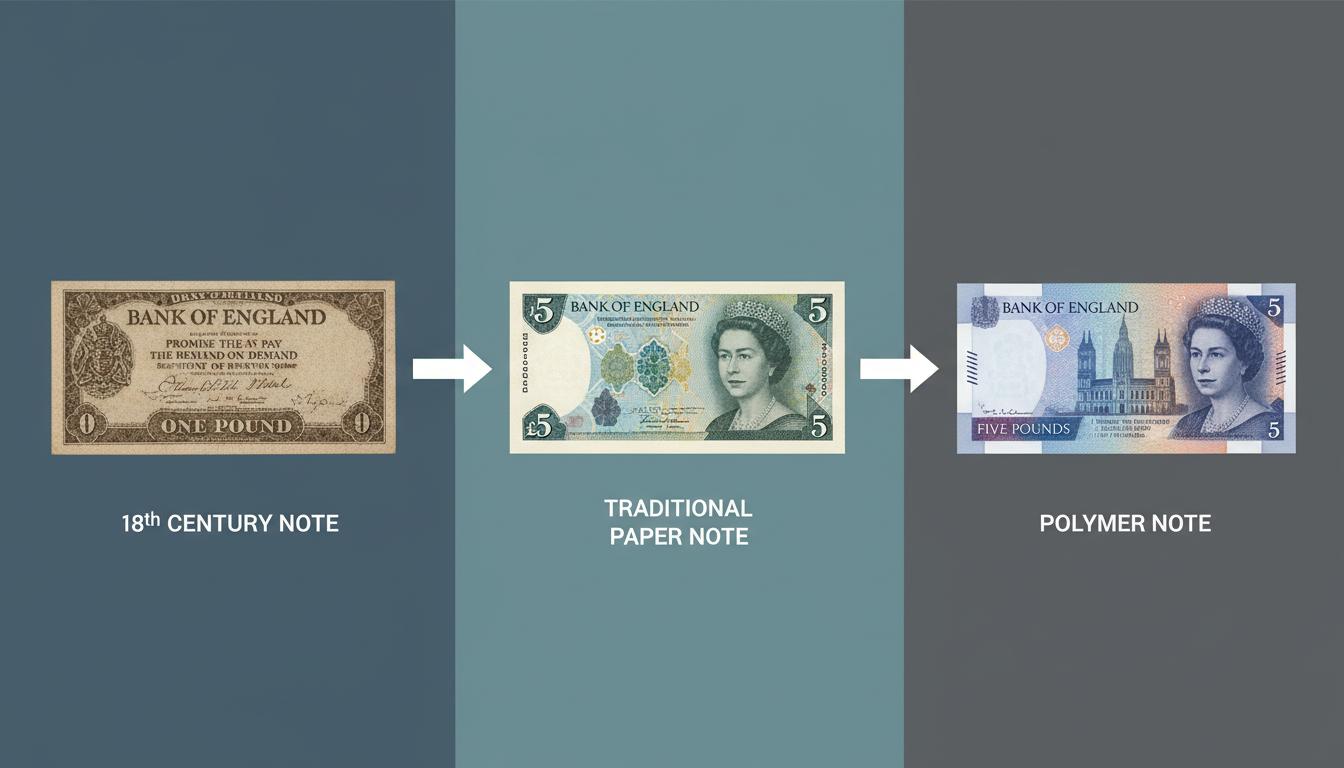
From a handwritten promise to pay a soldier to a high-tech polymer note featuring a codebreaker, the history of British banknotes is a journey through more than 300 years of innovation, conflict, and national identity. The money in your pocket tells a story of how a nation’s economy and technology have evolved, one note at a time.
This evolution reflects major shifts in Britain’s social and economic landscape, from funding wars to celebrating cultural icons. Each design change and security upgrade marks a new chapter in the story of the pound sterling, culminating in the durable and secure polymer notes we use today.
The Dawn of Paper Money: The First Bank of England Note
The story begins in 1694 when the Bank of England was founded to raise money for King William III’s war against France. The first Bank of England note was not currency as we know it but a handwritten promissory note, effectively an IOU from the bank to the bearer.
These early notes were issued for irregular amounts and had to be filled in by hand with the payee’s name, the date, and the cashier’s signature. Each one was a unique document, representing a promise to pay the bearer a specific sum on demand.
Early Security and Standardization
As the use of banknotes grew, so did the risk of counterfeiting. The first major security feature, the watermark, was introduced as early as 1697 to make forgery more difficult. This innovation marked the beginning of a long history of anti-counterfeiting measures.
By 1725, a degree of standardization arrived with partially printed notes. While the payee’s name and the exact amount were still added by hand, other elements were printed, streamlining the process. Denominations in this era were often high and included unusual sums like £25, £30, and up to £1,000, intended for large transactions between banks and wealthy individuals.
From Handwritten IOUs to National Currency
For nearly a century, banknotes were primarily high-value instruments. This changed due to the pressures of war. Gold shortages during the Seven Years’ War and the Napoleonic Wars led the Bank of England to issue lower denominations for the first time.
- The £10 note was introduced in 1759.
- The £5 note followed in 1793.
- The £1 and £2 notes appeared in 1797 to replace gold coins.
These lower-value notes made paper money accessible to the general public, fundamentally changing its role in the economy.
The Move to Mass Production
The era of handwritten notes officially ended between 1853 and 1855 with the introduction of fully printed banknotes. This shift to mass production allowed for greater consistency and more complex designs, further deterring counterfeiters. It was during this period that the figure of Britannia, a personification of the nation, became an enduring symbol on British currency, a tradition that continues today.
Centralization and Legal Tender
A pivotal moment came in 1833 when Bank of England notes were made legal tender in England and Wales for all sums above £5. This move was designed to protect the country’s bullion reserves and build public trust in paper money. A decade later, the Bank Charter Act of 1844 began the process of centralizing all note issuance within the Bank of England.
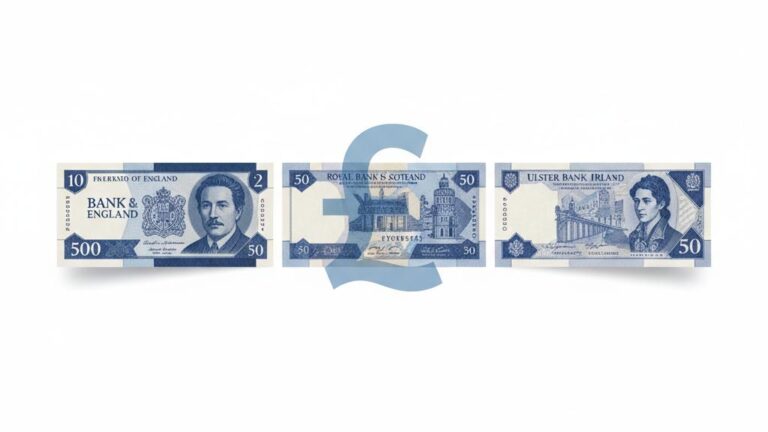
This act gradually phased out the right of private and provincial banks to print their own money, a process that was completed by 1921. While England and Wales consolidated under the Bank of England, the history of Scottish and Northern Irish banknotes followed a different path, with several commercial banks retaining the right to issue their own notes.
A Century of Change: The Making of the Modern Banknote
The 20th century brought rapid modernization to Britain’s currency. During World War I, the Treasury issued its own 10 shilling and £1 notes to conserve gold stocks needed for the war effort. These small denominations proved so popular that they remained in circulation long after the war, with the Bank of England taking over their production in 1928.
This same year, 1928, saw another major innovation: the first full-color, double-sided banknotes. The iconic monochrome “White Fiver” would persist until 1957, but the future of currency was clearly in multi-colored, intricate designs. The 20th century also saw Britain move away from the gold standard in 1931, cementing the role of banknotes as fiat currency, its value based on trust rather than gold backing. This was a key moment in the long history of the British pound sterling.
Color, Portraits, and New Denominations
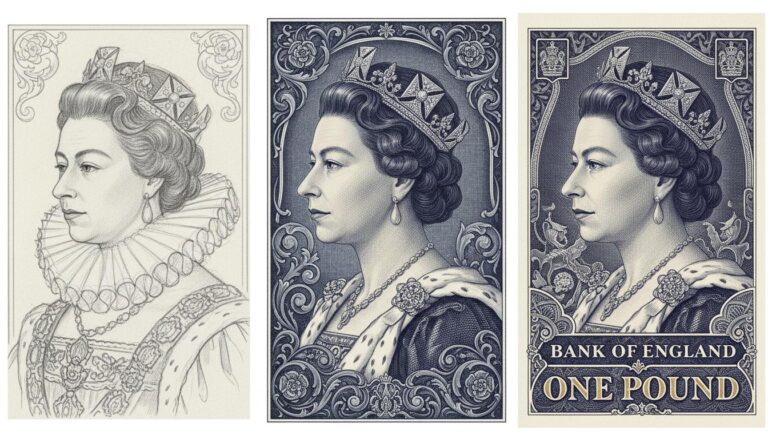
Perhaps the most significant design change occurred in 1960, when Queen Elizabeth II became the first monarch to be featured on a Bank of England note, appearing on a new £1 note. This established a tradition that continues today, cementing the monarch’s portrait as a key feature of the currency and a symbol of national identity.
The century also saw a shift in available denominations. High-value notes like the £500 and £1,000 were withdrawn by 1943. Meanwhile, higher denominations for public use were gradually reintroduced:
- £10 note: re-emerged in 1964
- £20 note: returned in 1970
- £50 note: introduced in 1981
As part of ongoing currency modernization, which included the major event of decimalization in 1971, the £1 note was eventually phased out. Due to its short lifespan in circulation, it was replaced by a more durable £1 coin in 1983, with the last paper note withdrawn in 1988.
A New Era: The History of Polymer Pound Notes
The most recent chapter in the history of British banknotes began in 2016 with the switch to polymer. These plastic-based notes offer significant advantages in durability, security, and cleanliness over their paper predecessors. The transition was rolled out over five years, with each note celebrating a prominent British figure.
- £5 Note (2016): Featuring Sir Winston Churchill
- £10 Note (2017): Featuring Jane Austen
- £20 Note (2020): Featuring J.M.W. Turner
- £50 Note (2021): Featuring Alan Turing
These individuals represent key contributions to Britain’s political, literary, artistic, and scientific heritage, making the currency a small gallery of national achievement.
Why Switch to Polymer?
The move to polymer was driven by the need for a more advanced and secure currency. Polymer notes are resistant to tearing and moisture, lasting significantly longer than paper. This durability also makes them more environmentally friendly over their life cycle.
Critically, they incorporate state-of-the-art security features that are extremely difficult to counterfeit. These include large see-through windows, detailed metallic holograms, and tactile features to help visually impaired individuals identify denominations. You can explore these features on the Bank of England’s official website.
The Legacy of Old English Paper Money
With the transition to polymer complete, all paper banknotes are now withdrawn from circulation. This old English paper money has become a popular field for collectors, with rare denominations and early designs fetching high prices at auction.
For those who still have old notes, the Bank of England maintains a policy of exchanging them for their face value, ensuring that the money never truly loses its worth. The Bank provides an extensive record of all withdrawn notes dating back to 1694, preserving this rich monetary history for future generations.
Frequently Asked Questions
When was the first Bank of England note issued?
The first Bank of England note was issued in 1694. It was a handwritten promissory note created to raise funds for war and was filled in with the bearer’s name and the specific amount.
Why did the UK switch to polymer banknotes?
The UK switched to polymer banknotes because they are more durable, secure, and environmentally friendly than paper notes. They include advanced anti-counterfeiting features like holograms and see-through windows and last much longer in circulation.
Which figures have appeared on British pound notes?
Besides the reigning monarch and the symbolic figure of Britannia, modern British banknote figures include notable historical contributors. The current polymer series features Sir Winston Churchill (£5), Jane Austen (£10), J.M.W. Turner (£20), and Alan Turing (£50).
When did British banknotes become legal tender?
Bank of England notes became legal tender in England and Wales in 1833 for amounts of £5 and under. This was a crucial step in establishing them as a trusted national currency.
Are old English paper banknotes still valid?
No, old paper banknotes have been withdrawn from circulation and are no longer legal tender. However, they can still be exchanged for their face value at the Bank of England.
Conclusion
The history of the British banknote is a reflection of the nation’s own story. From simple, handwritten IOUs born out of military necessity to the sophisticated polymer notes that celebrate cultural icons, each banknote is a piece of economic and artistic history. This journey showcases a constant drive for innovation, security, and a currency that truly represents its people.
As technology continues to evolve, so too will the money we use, but the legacy of these paper and polymer notes provides a tangible link to the past. Understanding their history gives us a deeper appreciation for the complex systems that underpin our modern economy.