The Gold Certificate: US Dollar Backing for Interbank Use

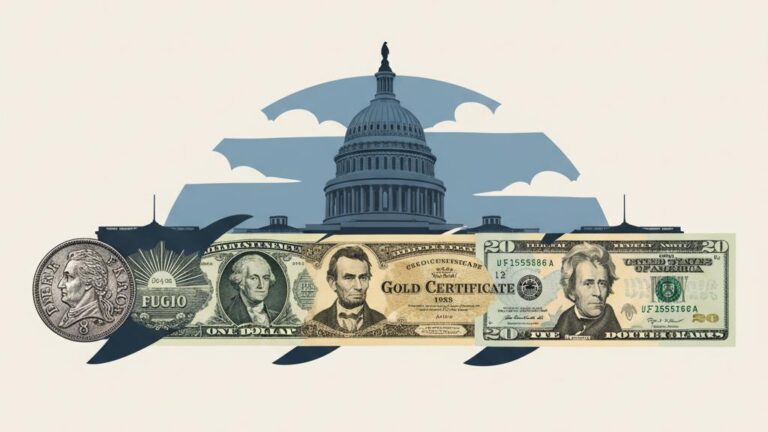
In an era when the U.S. dollar’s value was directly tied to physical gold, the financial system required a practical way to manage large sums without the burden of transporting heavy bullion. The solution was the gold certificate us dollar, a form of paper currency that served as a receipt for gold held by the U.S. Treasury. While available to the public, these notes found their greatest utility as a high-value instrument for settling balances between banks and large commercial enterprises.
A gold certificate represented a direct claim on a specific quantity of gold, making it a cornerstone of the American economy from the Civil War to the Great Depression. This article explores the history of these unique financial instruments, their critical role in interbank transactions, and the policy shifts that ultimately rendered them historical artifacts.
The Origins and Purpose of Gold Certificates
The concept of paper representing gold ownership has deep roots, but its official adoption in the United States was a direct response to national crisis and economic expansion. These certificates were created to streamline commerce and provide confidence in the nation’s currency.
Financing the Civil War and Ensuring Stability
Gold certificates were first authorized by the U.S. government in 1863, primarily to help finance the staggering costs of the Civil War. Although authorized, the first notes were not printed and issued until 1865. The system allowed merchants, bankers, and wealthy individuals to deposit gold coins or bullion at the U.S. Treasury and receive paper certificates in return.
This innovation offered significant advantages. Carrying paper was far more convenient and secure than transporting large amounts of physical gold, which helped facilitate commerce and instill investor confidence in the U.S. government’s financial standing.
Standardization and Widespread Adoption
While early versions existed, gold certificates began to circulate more broadly in 1879. By 1882, the Treasury was issuing them in standardized denominations ranging from $20 to $10,000. These high-value notes were perfectly suited for large financial transactions, making them the preferred currency for banks settling accounts and for major commercial users.
How the Gold Certificate US Dollar Functioned Under the Gold Standard
The entire gold certificate system was built upon the foundation of the gold standard, a monetary policy that directly linked the value of the U.S. dollar to a fixed amount of gold. This framework dictated how the certificates were used and valued.
The Legal Framework: From Gold Standard to the Federal Reserve
Under the gold standard, the value of the dollar was fixed at $20.67 per ounce of gold until 1934. The meaning of gold convertibility was that anyone holding a gold certificate could, in theory, exchange it for its equivalent value in gold. This system was formalized by the U.S. Gold Standard Act of 1900.
A significant shift occurred with the 1913 Federal Reserve Act, which established the nation’s central bank. This act stipulated that Federal Reserve Notes only needed to be backed by 40% gold, signaling a gradual move away from a direct, one-to-one backing for all paper currency.
The Role in Large-Scale and Interbank Transactions
Although gold certificates were legal tender for settling debts, they were rarely used for everyday retail purchases. Their high denominations made them impractical for buying groceries or paying for small services. Instead, they became the lifeblood of the banking system, used to transfer large reserves and settle accounts between financial institutions efficiently and securely.
The $100,000 Gold Certificate: The Ultimate Interbank Note
The most extreme example of the gold certificate’s role in interbank finance is the 1934 Series $100,000 Gold Certificate. Featuring the portrait of President Woodrow Wilson, this note holds the distinction of being the highest denomination of currency ever produced by the United States.
Crucially, these notes were never intended for public circulation. Their sole purpose was to facilitate transactions among the twelve Federal Reserve Banks. According to the U.S. Bureau of Engraving and Printing, these certificates streamlined the process of balancing accounts and transferring massive funds within the central banking system after the Gold Reserve Act of 1934.
The Transition Away from Gold-Backed Currency
The Great Depression triggered a series of unprecedented government actions that fundamentally changed the nation’s monetary system. These measures directly led to the withdrawal of gold certificates from circulation and ended the era of US currency backed by gold.
The Great Depression and Executive Order 6102
In the throes of the Great Depression, citizens began hoarding gold, fearing bank failures and economic collapse. To halt this trend and stabilize the economy, President Franklin D. Roosevelt signed Executive Order 6102 in 1933. As detailed by the National Archives, this order mandated that all private citizens turn in their gold coins, gold bullion, and gold certificates to the Federal Reserve in exchange for U.S. dollars at the prevailing rate.
The Gold Reserve Act of 1934 and the End of an Era
The following year, the Gold Reserve Act of 1934 formalized this policy. It transferred ownership of all monetary gold in the country to the U.S. Treasury, making private ownership illegal for monetary purposes. This act officially ended the public’s ability to redeem paper money for gold, effectively ending the domestic gold standard.
The Final Step: Ceasing All Redemption in 1964
Although public redemption had ended decades earlier, the U.S. Treasury officially ceased all forms of gold certificate redemption in 1964. This final measure rendered the few remaining notes valueless as legal tender, cementing their transition from functional currency to historical collectibles.
Gold Certificates vs. Silver Certificates: A Key Distinction
During the same historical period, the U.S. Treasury also issued silver certificates. While they functioned similarly as representative money, the fundamental difference between gold and silver certificate notes was the precious metal that backed them.
| Feature | Gold Certificate | Silver Certificate |
|---|---|---|
| Backing Asset | Physical gold held at the U.S. Treasury | Physical silver held at the U.S. Treasury |
| Key Years of Use | 1863–1933 | 1878–1964 |
| Redemption | Redeemable for gold until 1933 for the public | Redeemable for silver until 1964 |
| Modern Status | Collectible only, not legal tender | Collectible only, not legal tender |
Both types of certificates represented a defining era of American currency, but they were backed by different assets and followed slightly different timelines, as explored in the history of the silver certificate era.
The Legacy and Collectible Status of Gold Certificates
The phasing out of gold certificates was part of a broader global shift away from the gold standard, culminating in the 1971 “Nixon Shock” that ended international convertibility of the U.S. dollar to gold. Today, modern U.S. currency is fiat money, backed only by the full faith and credit of the government rather than a physical commodity.
Surviving gold certificates are no longer redeemable for gold or usable as currency. Instead, they are prized artifacts for numismatists (currency collectors), historians, and economists. Their value is determined by factors such as denomination, year of issue, rarity, and physical condition, serving as a tangible link to a transformative period in U.S. monetary history.
Frequently Asked Questions
What is a gold certificate in U.S. currency history?
A gold certificate was a type of paper money issued by the U.S. Treasury between the 1860s and 1933. It represented a specific amount of gold held in reserve and was redeemable for that gold, reflecting the nation’s adherence to the gold standard.
Can gold certificates still be redeemed for gold today?
No, gold certificates cannot be redeemed for gold. Public redemption ended in 1933 with Executive Order 6102. Since 1964, they are no longer considered legal tender and their value is purely as a collectible item.
How did gold certificates differ from silver certificates?
The primary difference was the backing asset. Gold certificates were backed by and redeemable for gold, while silver certificates were backed by silver. Both are now obsolete forms of currency valued only by collectors.
Why were gold certificates discontinued?
They were discontinued during the Great Depression to prevent gold hoarding and give the government more control over the money supply. President Roosevelt’s economic policies aimed to stabilize the banking system by moving the country away from the rigid gold standard and banning private ownership of monetary gold.
Are gold certificates valuable today?
Yes, many gold certificates are valuable to collectors. Their worth depends on their condition, rarity, denomination, and year of issue. They hold no face value as currency but can be worth significantly more on the numismatic market.
Conclusion
The gold certificate was far more than just paper money; it was a promise backed by physical gold and a critical tool for the U.S. financial system. Primarily used to settle massive accounts between Federal Reserve Banks and large institutions, it facilitated commerce in an era when trust was rooted in tangible assets. Its journey from a functional interbank instrument to a treasured collectible reflects the profound evolution of the American monetary system.
Understanding the rise and fall of the gold certificate provides essential context for the broader history of the U.S. dollar as a reserve currency and the global shift toward modern fiat money.