The Currency of Divided Berlin: East and West Marks
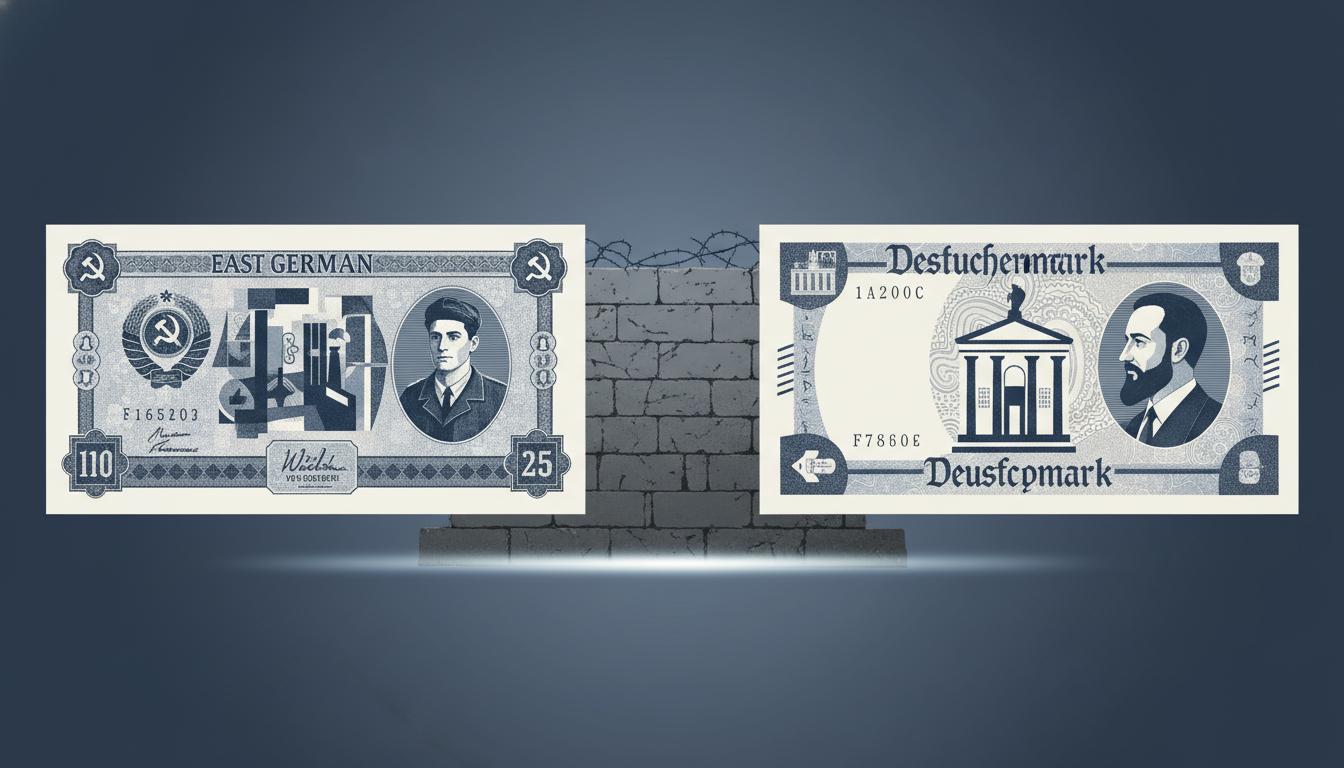
During the Cold War, the Berlin Wall was the most potent symbol of a divided world. But beyond the concrete and barbed wire, an invisible yet equally powerful barrier separated East from West: money. The story of the divided Berlin currency is a tale of two competing economic systems, two worlds of value, and a daily reminder of the profound ideological gulf separating a city and a nation.
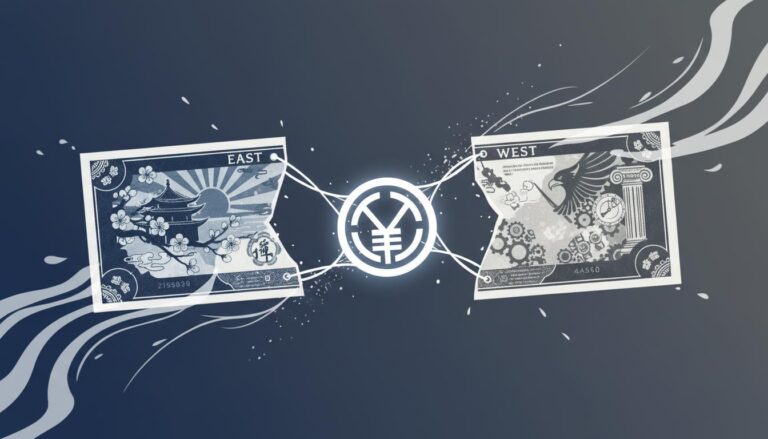
At the heart of this divide were two distinct currencies: the stable, internationally respected Deutsche Mark (DM) of West Germany and the non-convertible, isolated Mark der DDR (Ostmark) of East Germany. This monetary split was not just an economic footnote; it shaped daily life, fueled black markets, and ultimately played a crucial role in the dramatic story of German reunification. Understanding the clash between the East German mark vs West German mark is key to grasping the reality of life in divided Berlin.
The Birth of Two Marks: A Post-War Economic Split
Following the devastation of World War II, Germany was partitioned into four occupation zones. The Western zones, controlled by the Allied powers, and the Eastern zone, controlled by the Soviet Union, quickly developed along separate political and economic paths. This divergence was cemented with a crucial economic decision in 1948.
On June 20, 1948, the Western powers introduced a sweeping currency reform, replacing the devalued Reichsmark with the new Deutsche Mark. This move, managed by the Bank deutscher Länder (later the Bundesbank), was designed to curb rampant inflation and lay the groundwork for economic recovery. As detailed by Germany’s central bank, the Deutsche Bundesbank, this reform was fundamental to stabilizing the West German economy.
The Soviet Union viewed this as a hostile act and responded just days later. They introduced their own currency for the eastern zone, which would eventually become officially known as the Mark der DDR in 1964, often called the Ostmark (“East Mark”). This act created two separate economic spheres and two currencies, setting the stage for decades of monetary division.
East German Mark vs West German Mark: A Tale of Two Economies
The two German marks were worlds apart, each reflecting the economic system that created it. The stark difference between them was a constant theme during the Cold War currency Berlin era.
The Stable West: The Deutsche Mark (DM)
The West German Deutsche Mark quickly became a symbol of stability and prosperity. Backed by a booming market economy, it was a fully convertible and internationally recognized hard currency. For West Berliners, the DM provided access to a world of consumer goods and economic freedom, becoming a cornerstone of the post-war German economic miracle.
The Isolated East: The Mark der DDR (Ostmark)
In contrast, the East German mark was a soft currency, meaning it was not convertible on international markets. Its value was determined by state decree rather than market forces, rendering it nearly worthless outside the borders of the German Democratic Republic (GDR). The Ostmark was the financial instrument of a centrally planned economy, limiting East Germans’ access to Western products and reinforcing their economic isolation.
The Berlin Wall Currency Divide: Reality vs. Propaganda
Nowhere was the currency divide more apparent than in Berlin. After the construction of the Berlin Wall in 1961, the city became a microcosm of the global ideological struggle, with the two marks at the center of the economic conflict.
The 1:1 Myth: Official Parity
The East German government officially insisted on an exchange rate of 1:1 parity between the Ostmark and the Deutsche Mark. This policy was pure political propaganda, designed to project an image of equality and economic strength that did not exist. For the GDR, admitting the true, lower value of its currency would have been an ideological defeat.
The Black Market Reality
The reality on the streets and in the black markets of Berlin told a different story. The true value of the Ostmark was drastically lower than the official rate. On the black market, the exchange rate fluctuated but was often in the range of 5 to 10 Ostmarks for a single Deutsche Mark. This unofficial rate reflected the massive disparity in purchasing power and economic performance between the two systems.
The ‘Zwangsumtausch’: Forced Exchange
To prop up its finances and acquire valuable hard currency, the GDR implemented a policy called Zwangsumtausch (forced exchange). This rule required most Western visitors to exchange a set amount of Deutsche Marks (or other Western currencies) for East German marks at the artificial 1:1 rate for each day of their stay. This money was non-refundable and often far more than a visitor could spend on the limited goods available.
At the same time, East German citizens faced severe legal repercussions for possessing Western currency. Strict controls were in place to prevent the free flow of money, further cementing the economic barrier of the Berlin Wall currency divide.
Unification and the End of the Divided Berlin Currency
The fall of the Berlin Wall in November 1989 set in motion a rapid chain of events leading to German reunification. A critical step in this process was the monetary union, which took place on July 1, 1990, even before the formal political union.
The Controversial Conversion Rate
The question of how to convert billions of Ostmarks into Deutsche Marks was intensely debated. Ultimately, a politically motivated and highly generous exchange rate was chosen to provide a massive subsidy to the East and speed up integration. The conversion was handled on a tiered basis:
- 1:1 Rate: Applied to wages, pensions, and personal savings up to 4,000 Ostmarks per person.
- 2:1 Rate: Applied to larger personal savings and company debts.
- 3:1 Rate: Applied to funds acquired speculatively shortly before the union.
Economic Shock and Aftermath
While the favorable exchange rate gave East Germans immediate access to the stable Deutsche Mark and Western goods, the economic consequences were severe. As the Brookings Institution noted, the currency union exposed East German industries to full competition overnight. Unable to compete, many factories closed, leading to large-scale unemployment and a painful period of economic restructuring.
The Deutsche Mark served as the currency for all of Germany until it was replaced by the Euro, first in accounting in 1999 and then with cash in 2002. The final chapter of the history of the German Mark closed, ending an era defined by division and reunification.
Frequently Asked Questions
What was the difference between the East German mark and the West German mark?
The West German Deutsche Mark (DM) was a stable, convertible currency widely recognized internationally. In contrast, the East German mark (Ostmark) was not convertible, was maintained at an artificial 1:1 official rate with the DM, and was nearly worthless outside East Germany.
How did the currency exchange work for East and West Germans during reunification?
At reunification in 1990, East German marks were exchanged for Deutsche Marks at a 1:1 rate for essential funds (wages, pensions, and up to 4,000 marks per person). Higher amounts were converted at 2:1 or 3:1. This policy was a subsidy to speed integration but was controversial for its harsh economic effects.
Why was there a black market for currency in Berlin?
A black market emerged due to the huge disparity in real value between the Ostmark and the Deutsche Mark. It allowed people to trade currencies at rates reflecting their actual purchasing power, bypassing the unrealistic official 1:1 rate and strict government controls.
Did East Germans have access to Western currency?
Ordinary East German citizens were legally forbidden from holding or using hard currencies like the DM, with strict penalties for offenders. Some acquired Western money through relatives in the West or illicitly on the black market, but it was a risky endeavor.
What impact did the currency union have on East Germany after the Wall fell?
The currency union provided East Germans with immediate access to a stable currency and Western consumer goods. However, it also caused massive economic disruption, as Eastern industries became instantly uncompetitive, leading to widespread factory closures and soaring unemployment.
Conclusion: More Than Just Money
The two German marks were far more than just units of exchange; they were powerful symbols of the Cold War. The Deutsche Mark represented capitalist prosperity and freedom, while the Ostmark stood for the limitations of a state-controlled socialist economy. The currency divide in Berlin was a daily, tangible expression of the ideological chasm that defined the era.
The eventual monetary union was a bold, painful, but necessary step toward knitting a divided nation back together. It marked the end of an economic wall that was, in its own way, as formidable as the physical one it accompanied, closing a unique chapter in Germany’s monetary history.